A software architect is an expert developer who makes the high-level design choices—technical standards, tools, and platforms—that determine a system's survival.
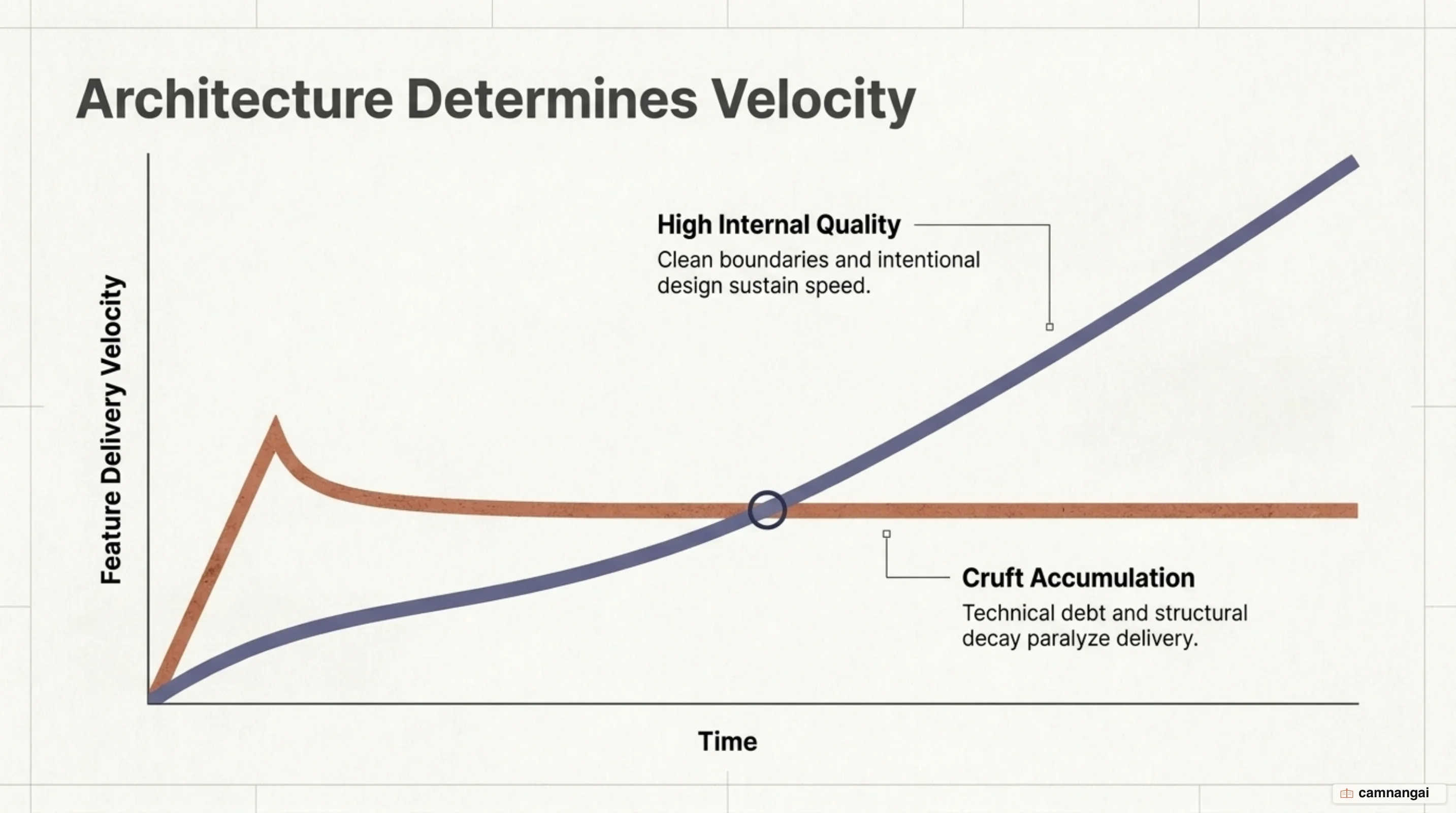
Based on the shared understanding of expert developers, architecture represents the most critical aspects of internal system design. It revolves around the decisions that are hardest to change and identifying the structural choices that can make or break a project if left unmanaged. Good architecture exists specifically to prevent the accumulation of "cruft," ensuring a system remains evolvable rather than choking on its own complexity.
While high-quality architecture is often perceived as an added expense, the opposite is true. High internal quality is the only reliable way to maintain a high velocity of feature delivery over time. When teams ignore the structural integrity of a codebase, they create internal friction that slows every subsequent change. Attention to internal architecture pays off in weeks, not months, by keeping the system clean and modifiable.
What does a software architect actually do?
The daily value of a software architect lies in discovering and controlling high-stakes architectural choices. Rather than acting as a micromanager for every line of code, the architect identifies which specific structural elements would cause systemic failure if left to chance. They prioritize design decisions that govern overall system structure and behavior, ensuring the conceptual integrity of the project remains intact across every phase.
Specific responsibilities involve setting technical standards, selecting development tools, and defining the design principles that the engineering team executes. The architect owns platform selection and ensures the chosen tech stack provides an acceptable solution for both immediate delivery and long-term maintenance. By using the Architecture Tradeoff Analysis Method (ATAM) as an early-warning mechanism, they analyze system behavior before full implementation, allowing stakeholders to identify design risks early.
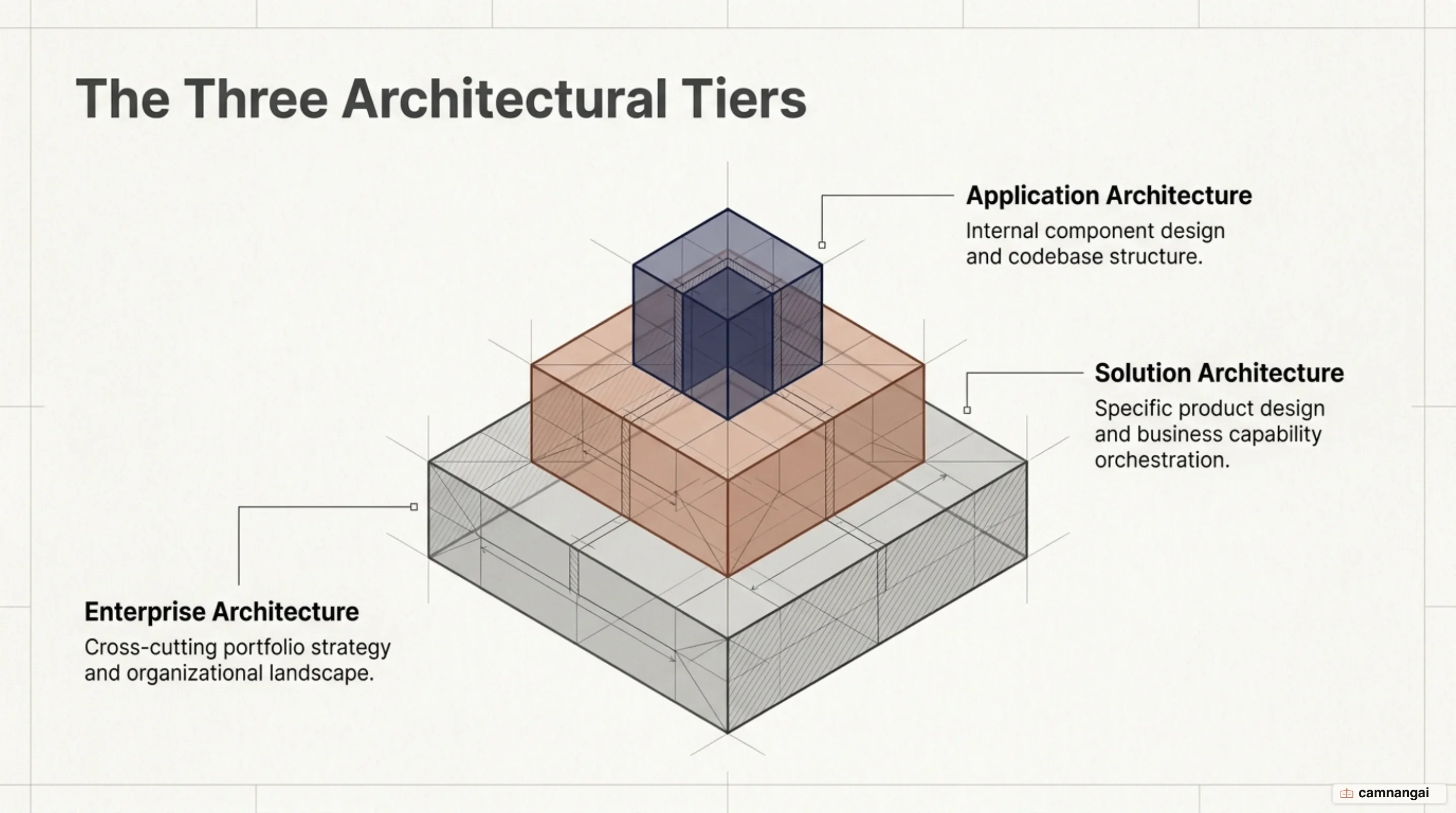
Core technical foundations span both breadth and depth:
- Programming languages: Java, Python, Go, Node.js, or C# (.NET).
- Architectural patterns: Microservices, Layered Architecture, Distributed Systems, Event-driven systems.
- Design principles: SOLID, Domain-Driven Design (DDD), Test-Driven Development (TDD), ACID properties, CAP Theorem.
- Security: OWASP (Open Web Application Security Project) baselines, Public Key Infrastructure (PKI), hashing algorithms, authentication strategies.
- Operations & Infrastructure: CI/CD (Continuous Integration and Continuous Delivery) pipelines, DevOps, Docker containers, Infrastructure as Code, SQL and NoSQL data stores.
Bridging business goals and the engineering team
Architectural decisions directly drive business value. By applying frameworks like the Well-Architected Framework, architects use battle-tested practices to build workloads that are reliable, secure, and cost-optimized. They translate high-level business priorities into concrete technical roadmaps, ensuring engineering effort focuses on systems that solve real customer and business problems.
Software systems are also social constructions. Their boundaries are rarely defined by code alone; they reflect organizational boundaries, team budgets, and product domain divisions. If the technical architecture ignores these organizational realities, it faces constant operational friction. The architect navigates these boundaries to ensure technical units, such as individual services, reflect business domains cleanly, avoiding distributed monoliths where every feature change requires cross-team coordination.
A well-communicated architectural strategy illuminates a unified direction, allowing autonomous engineering teams to build quickly without seeking constant sign-offs. When governance is conducted as an open technical dialogue rather than a set of bureaucratic constraints, teams preserve development velocity while adhering to the technical standards required for the business to scale.
The core discipline: balancing trade-offs and quality attributes
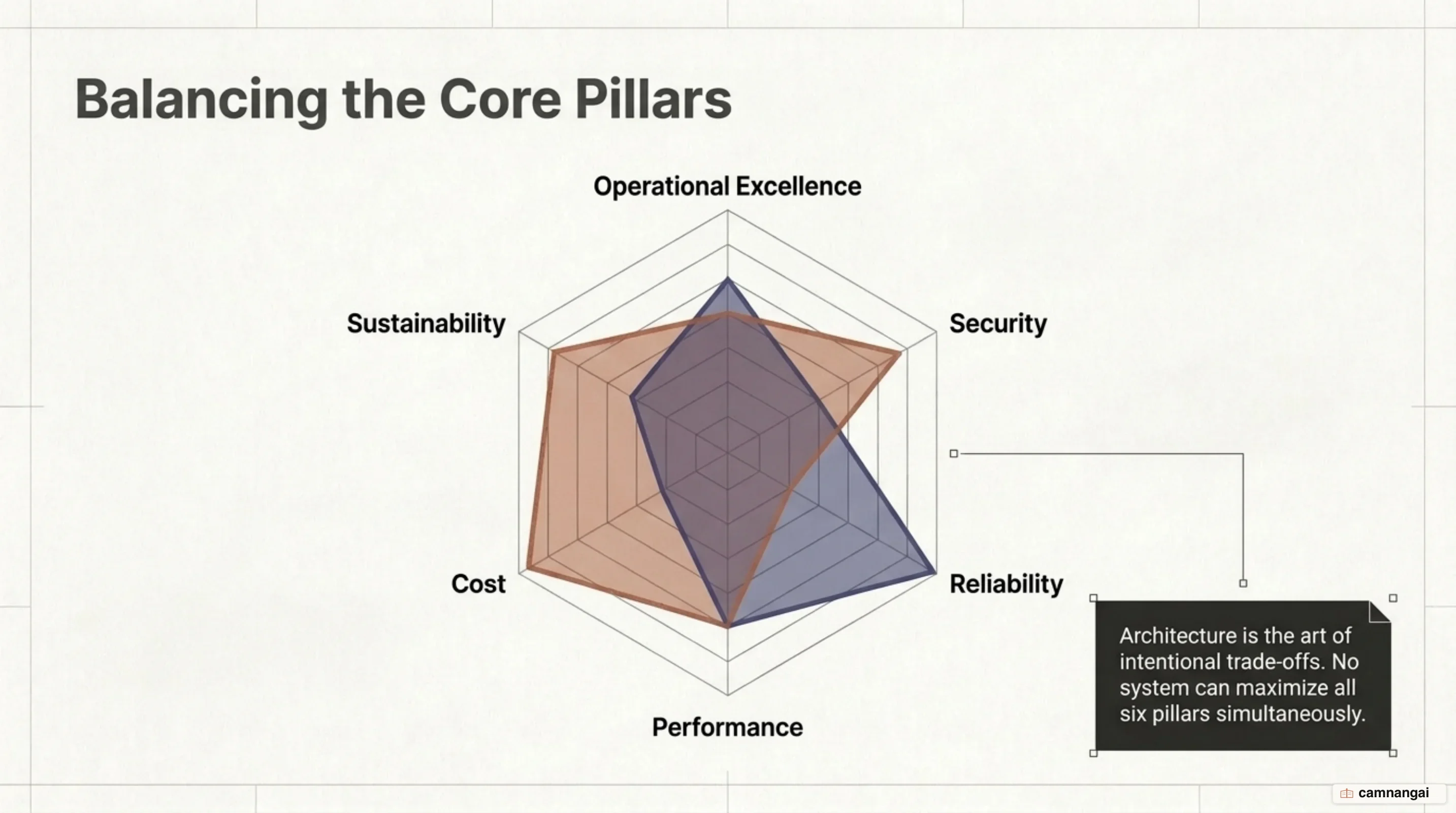
The heart of software architecture is the discipline of managing trade-offs. In real systems, there are no silver bullets, only compromises suited to specific constraints. Architects balance systems across core pillars: Operational Excellence, Security, Reliability, Performance Efficiency, Cost Optimization, and Sustainability. Prioritizing raw throughput often increases infrastructure spend; tightening security policies can impact user workflows. The architect's responsibility is identifying the optimal balance point.
Architectural decision-making relies on analyzing quality attributes like modifiability, availability, and latency before writing extensive production code. Discovering fundamental design flaws after a system is fully built results in crippling rework costs. Architects employ evaluation methods like ATAM to quantify these risks, ensuring proposed architectures can genuinely withstand expected operational load.
In modern cloud-native environments, trade-offs present themselves continuously:
- Balancing the agility of microservices against the operational overhead of distributed tracing and networking.
- Balancing strict data consistency against high availability and lower latency via eventual consistency.
- Optimizing development speed against long-term cloud hosting bills.
- Designing automated self-healing mechanisms without introducing unnecessary code complexity.
Communication and leadership: breaking the "ivory tower" trap
The stereotype of the ivory tower architect who hands down massive design documents from an isolated office has failed in high-velocity software delivery. Modern software architecture relies on conversational leadership. Instead of functioning as an authoritarian decision-maker, the modern architect enables and coaches the engineering team to make sound architectural choices collaboratively.
The Advice Process provides a practical model: any engineer can make an architectural decision, provided they consult two groups first: those directly affected by the decision, and engineers with deep domain expertise. The goal is not consensus; it is actively seeking diverse perspectives to stress-test the proposal. This practice establishes transparency and collective ownership across the codebase.
To structure this collaboration, teams rely on two key mechanisms:
- Architectural Decision Records (ADRs): Lightweight documents stored directly in version control, capturing the context, alternatives considered, decision rationale, and accepted consequences. ADRs preserve institutional memory so future developers understand why a choice was made rather than guessing based on existing code.
- The C4 Model: A structured framework for visualizing software architecture across four hierarchical levels: Context, Containers, Components, and Code. High-level Context diagrams inform non-technical stakeholders, while Component and Code diagrams guide developer implementation.
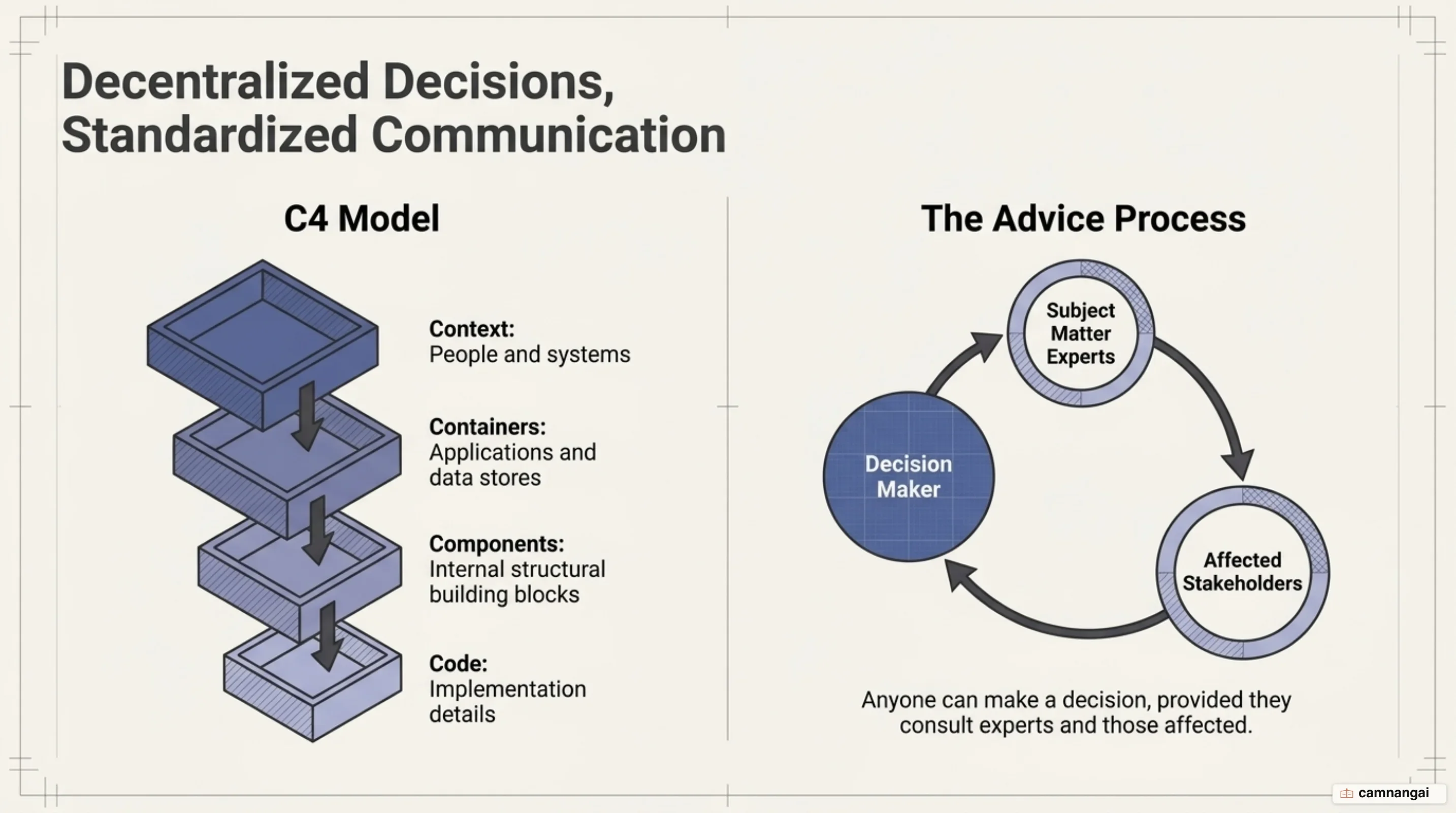
Teams reinforce this culture through a regular Architecture Advisory Forum—not as an approval board, but as an open venue for sharing spike findings, reviewing ADR proposals, and learning from technical missteps.
Enforcing architectural standards: automated governance and fitness functions
To protect systems against architectural drift over time, teams cannot depend entirely on manual code reviews. Modern architecture implements Architectural Fitness Functions—automated tests executed directly within CI/CD pipelines to verify whether a codebase continues to satisfy its structural objectives. While unit tests validate functional business logic, fitness functions verify that non-functional architectural boundaries remain intact.
Rather than checking system health passively in production, fitness functions measure compliance continuously during the build process. Violations are caught at the pull-request stage before technical debt solidifies into permanent structural defects.
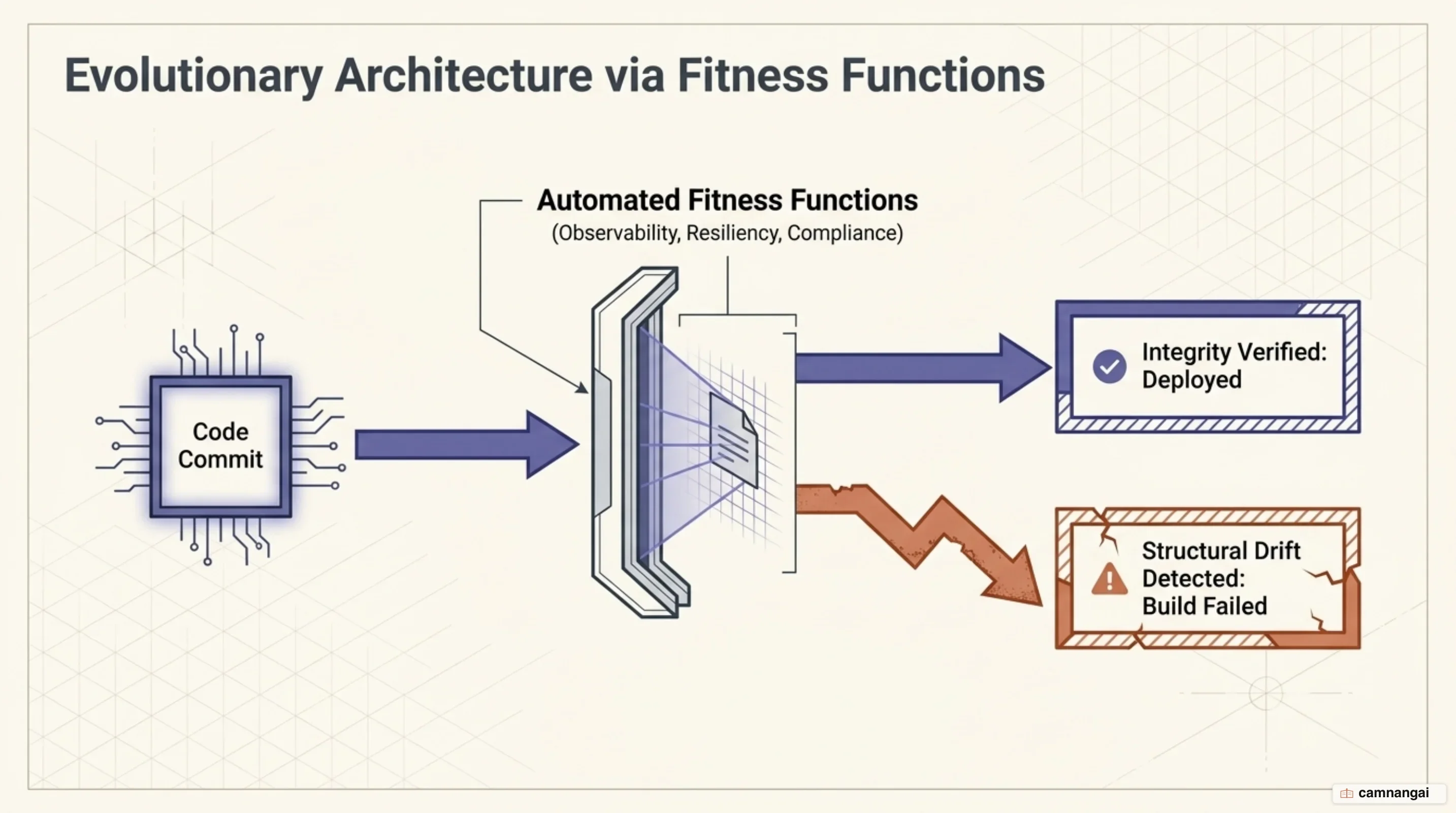
Practical examples of fitness functions include:
- PII (Personally Identifiable Information) protection tests: Automated log scanners verifying that sensitive customer information is never emitted to logging sinks.
- Dependency vulnerability checks: Build gates that reject third-party packages with critical CVE (Common Vulnerabilities and Exposures) ratings.
- Test coverage thresholds: Quality gates preventing pull requests from dropping test coverage below established project baselines.
- Architectural layer integrity: Static analysis rules ensuring presentation code never queries the database layer directly without passing through business services.
The transition: When are you ready to become a software architect?
The transition from senior developer to software architect is fundamentally a shift from focusing on "how" to implement code to understanding "why" architectural choices matter. You are ready for this role when your technical evaluation extends beyond the boundaries of an individual module to the health of the entire system. You can anticipate how technical decisions made today will impact operating costs, developer productivity, and business agility a year down the road.
Regardless of your title, the cardinal rule is to remain close to the code. An architect who stops programming quickly loses touch with implementation realities and begins formulating unworkable designs. Stay hands-on by contributing to complex refactorings, authoring technical spikes, and reviewing production code. Software architecture is not a managerial promotion; it is the discipline of safeguarding a system's evolutionary capacity through technical craftsmanship and empathetic leadership.
References
- Roadmap.sh Software Architect Roadmap
- Software Architecture Guide — Martin Fowler
- Scaling the Practice of Architecture, Conversationally — Martin Fowler
- Fitness Function-driven Development — Thoughtworks
- Software Architecture — CMU Software Engineering Institute
- AWS Well-Architected Framework
- Azure Well-Architected Framework — Microsoft Learn
- The C4 Model for Visualising Software Architecture