A pretrained model is a model already trained on a massive dataset, so it can be the starting point for more specific tasks.
In modern machine learning, you rarely start with a blank slate. You inherit the computational investment of large labs and skip the resource-intensive phase of learning general patterns. Training a standard convolutional network on ImageNet's 1.2 million images takes 2–3 weeks across multiple GPUs; starting from a pretrained model, you begin with a system that has already internalized fundamental visual features or linguistic structures.
The industry is scaling these models aggressively. Training compute for frontier models is expanding roughly 4x per year — faster than the peak growth of mobile phone adoption (2x/year) or human genome sequencing (3.3x/year). Development today is less about architectural innovation than about adapting these high-scale base layers well.
That shift moves your work from general-purpose knowledge to specific application. Instead of worrying about the trillions of floating-point operations (FLOP) needed to teach a model the basics of logic or vision, you focus on the final layers that solve your particular problem.
What is a pretrained model?
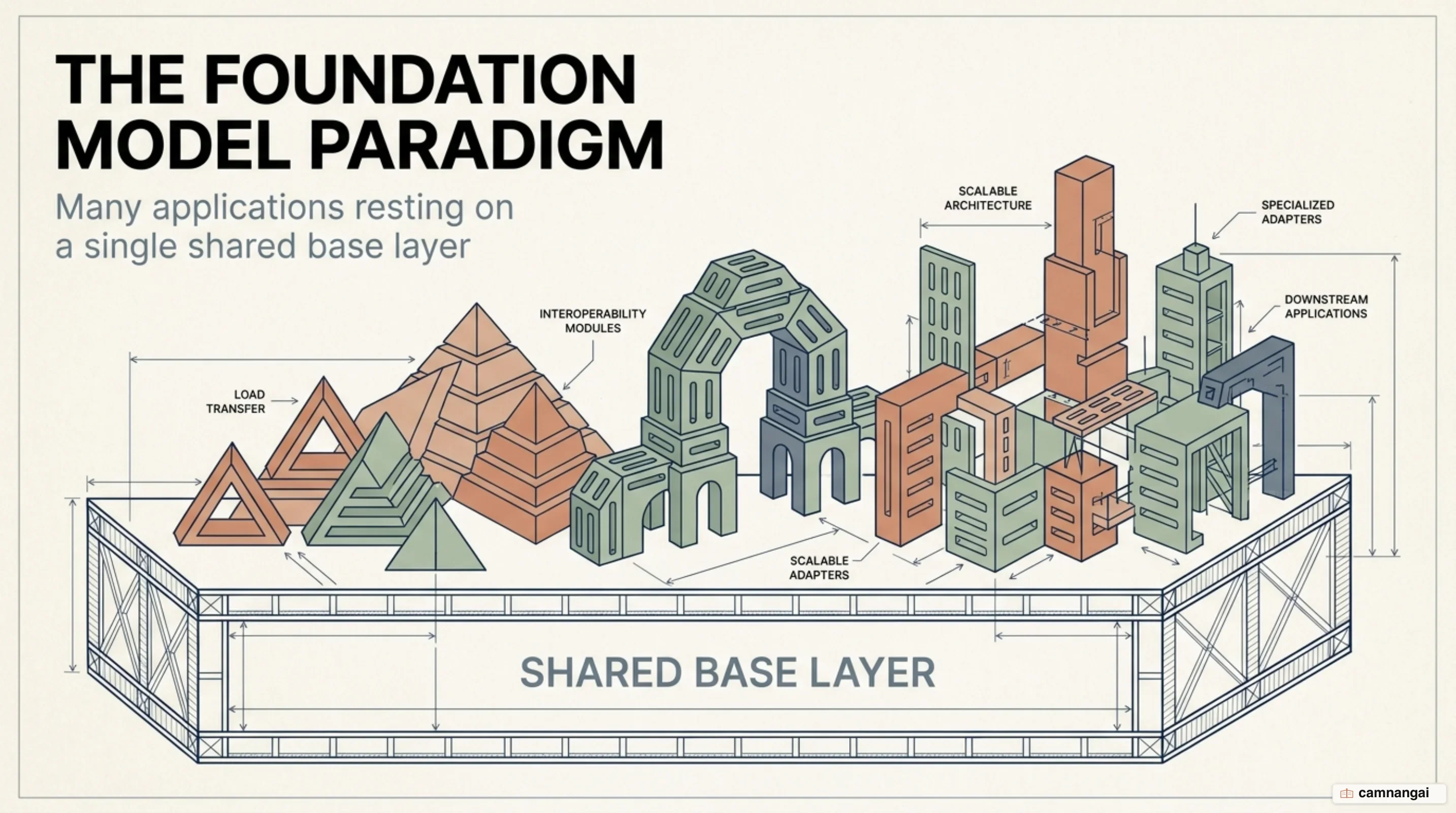
A pretrained model is a neural network whose weights and parameters have already been optimized through a primary, large-scale training phase. It works as a fixed feature extractor because of how neural layers develop: earlier layers learn generic features — edge detectors and color blobs in vision, basic grammar in text — that apply almost anywhere. Later layers grow more specific to the details of the original training data. You can freeze the generic base and replace only the final task-specific head.
The Stanford Center for Research on Foundation Models (CRFM) introduced the term "foundation model" to describe this shift toward a homogenized AI ecosystem. These models are increasingly multimodal, covering images, video and audio rather than text alone, and they are critical infrastructure for a wide range of downstream applications. Whether you pull one from a model zoo or an enterprise cloud provider, the knowledge is already baked into the mathematical weights.
How does a model get pretrained?
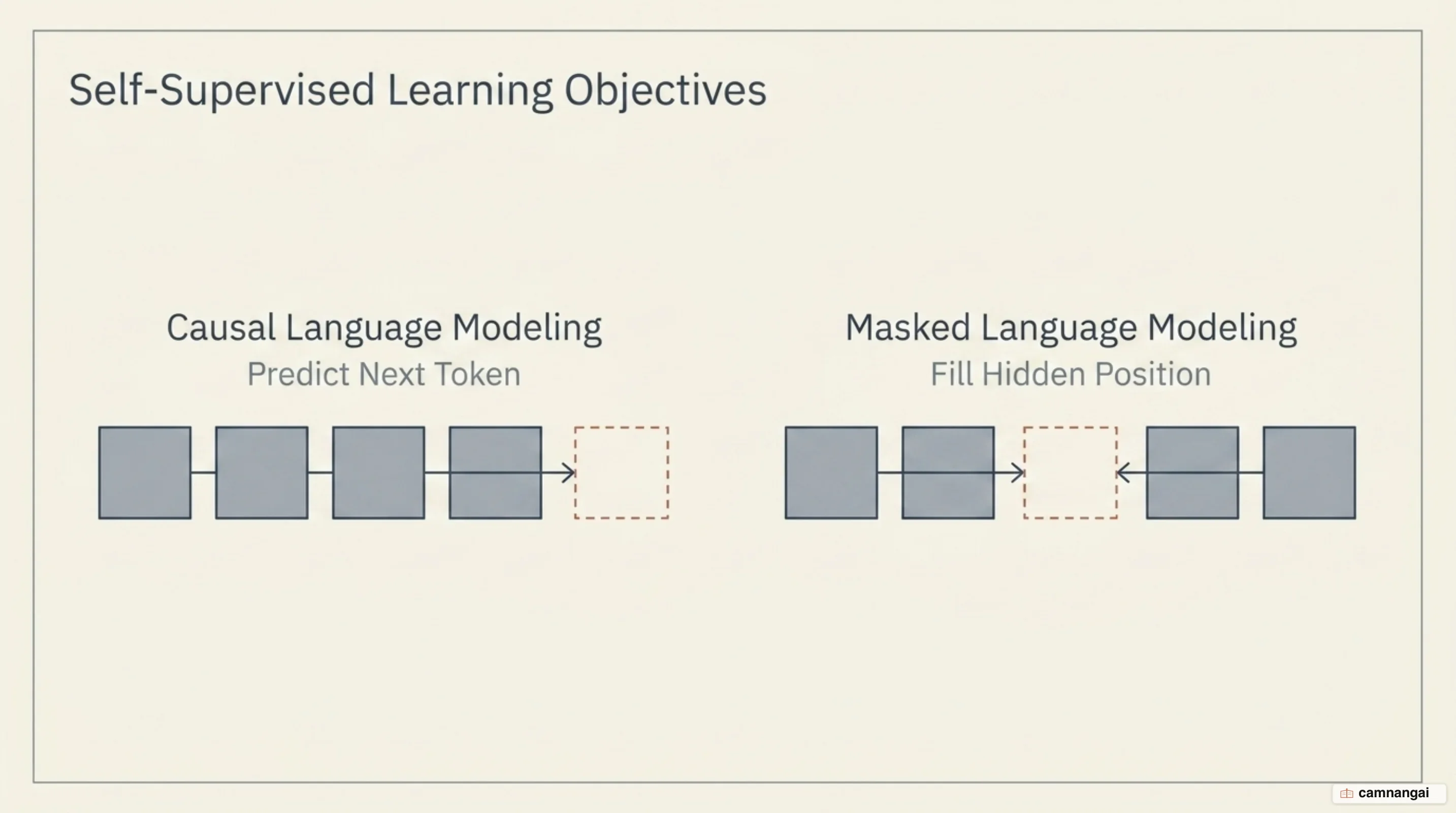
Pretraining is a self-supervised process: the data itself provides the labels. In natural language processing, two methods dominate. Causal language modeling uses next-token prediction, where the model learns to predict the following word in a sequence. Masked language modeling — the cloze task — hides random positions and makes the model fill in the blanks. To succeed at either task, the model has to build a deep internal representation of logic and factual association.
The compute involved is enormous. Frontier models like Llama 3.1 take roughly 4e25 FLOP to pretrain. To manage the energy bill, developers are moving toward FP8 training, about twice as efficient as standard 16-bit precision. Projections put the largest training runs at 2e29 FLOP by 2030, which needs specialized hardware and energy infrastructure on a new scale, and that infrastructure, rather than the math, is what will decide who gets to run one.
Why does nobody train a model from scratch?
Training from random initialization is rare, for two reasons: overfitting risk and resource scarcity. Train a large architecture on a small dataset and the model will memorize the noise in your data instead of learning features that generalize. Pull from a model zoo, the kind of repository Hugging Face or Caffe provides, and you get shared weights that avoid redundant compute and give you a mathematically better starting point.
The practical rules of thumb for transfer learning:
- Small dataset, similar to the original: freeze the base and train a linear classifier on the extracted features.
- Large dataset, similar to the original: fine-tune the entire network with a low learning rate, so you don't distort weights that are already optimized.
- Small dataset, very different from the original: extract features from earlier, more generic layers rather than the top ones.
- Large dataset, very different from the original: initialize with pretrained weights, then fine-tune the whole architecture.
Starting from scratch is economically and technically redundant for almost every use case.
From the base model to the model you chat with
A base model checkpoint is a text completer. It was trained on the indexed web, roughly 500 trillion tokens, and its goal is simply to predict the most likely next tokens. Ask a base model a question and it may answer with more questions, or a related list of topics, instead of a response. It holds the raw statistical knowledge and lacks the behavioral directives that make it useful to a person.
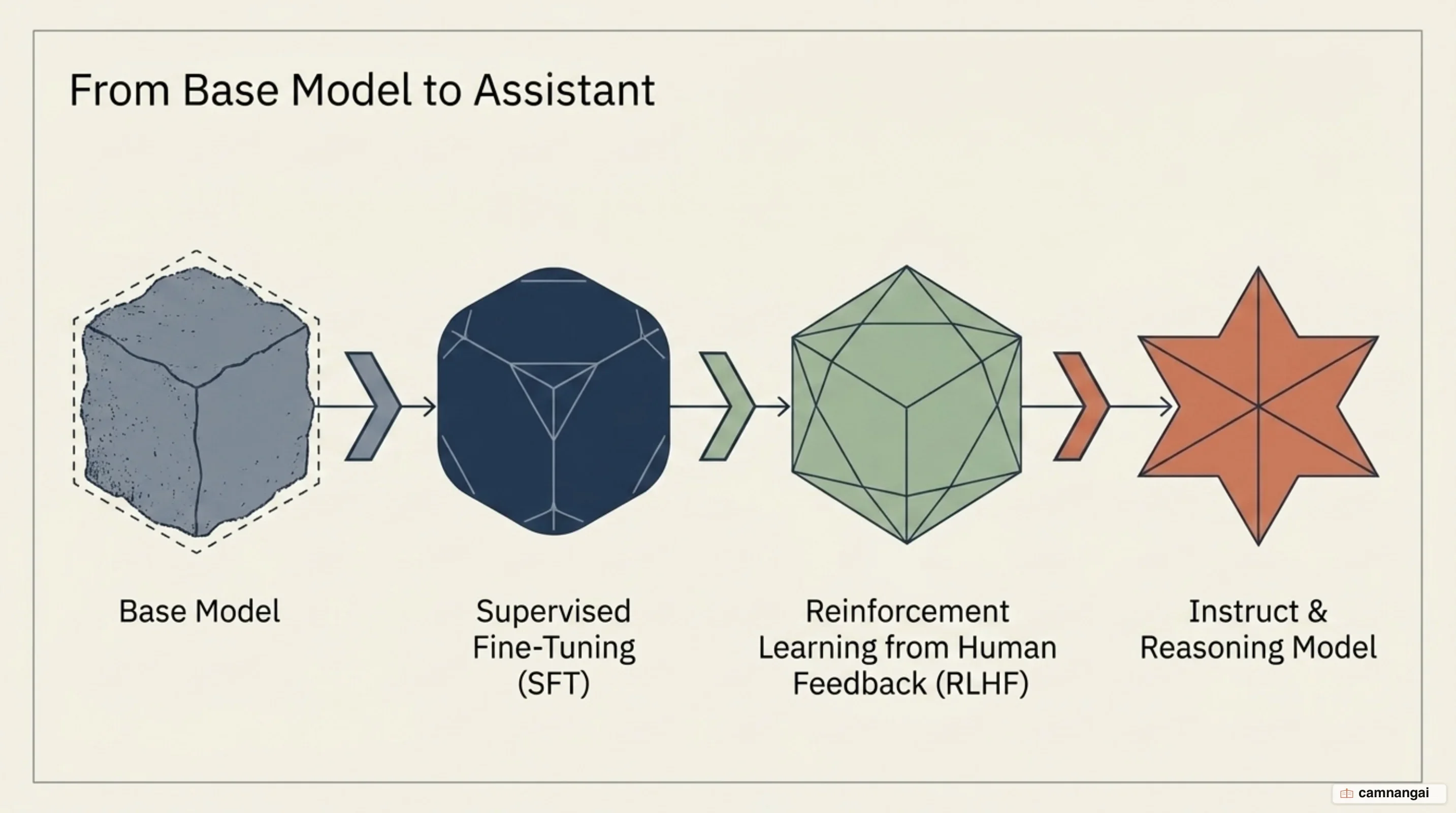
Making these models usable takes an adaptation step: further adjusting the weights of the base layer to follow conversational patterns and directives. That phase costs far less compute than the initial pretraining, and it is what turns raw statistical regularity into an instruct or reasoning model that can follow your intent.
What are the limits of a pretrained model?
Pretrained models are approaching a data wall. The indexed web holds roughly 500 trillion tokens of unique text, and high-quality human-written text for pretraining may be exhausted within this decade. That scarcity constrains the growth of base layers unless developers pivot successfully to multimodal data or high-fidelity synthetic data. Homogenization is the quieter risk: one flaw or bias in a popular base model propagates into every application built on top of it.
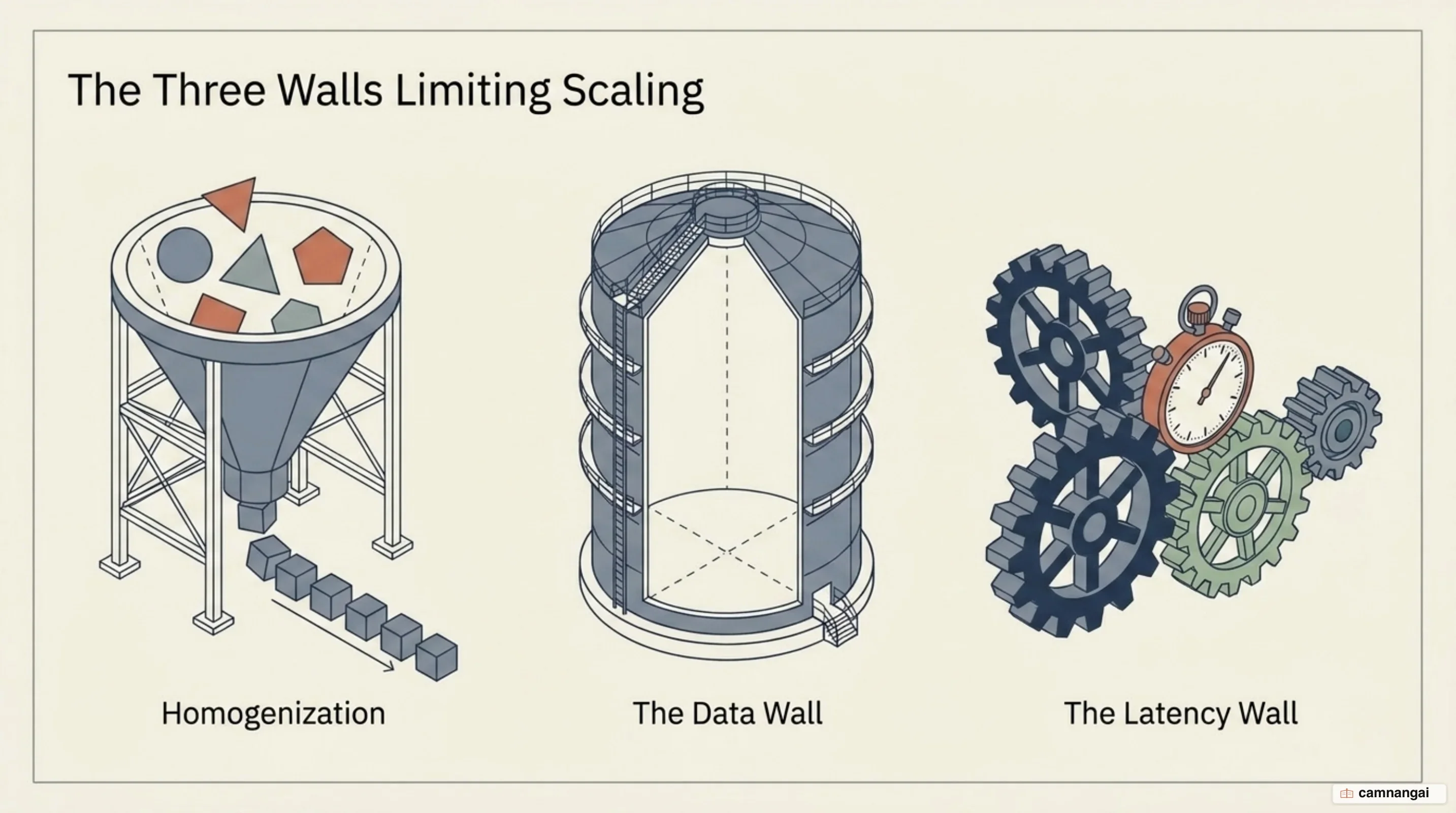
Physical constraints are appearing too. Training is hitting a latency wall. The minimum time for a gradient update is bounded by the speed of light in fiber, roughly two-thirds of light speed in a vacuum. Even with data center campuses pushing toward 1–5 gigawatt power limits, the communication delay between hundreds of thousands of GPUs sets a hard ceiling on how large and how fast these base layers can get by 2030.
When does this actually matter to you?
You use a pretrained model to get off-the-shelf capability that would otherwise cost you thousands of GPUs, tens of megawatts and months of continuous training to produce. Success now depends on how well you adapt existing weights, not on innovating at the architectural level.
For nearly every practical application, the job is transfer learning: take an existing base and adjust the top layer to fit your data. You inherit infrastructure that has already paid the cost of leaving random initialization behind, and that is what lets you chase performance without owning a supercomputer. I would treat that inheritance as the default, and make anyone arguing for a from-scratch run justify the electricity bill first.
References
- On the Opportunities and Risks of Foundation Models — Stanford CRFM
- What are Foundation Models? — AWS
- How do Transformers work? — Hugging Face LLM Course
- Transfer Learning — Stanford CS231n
- Base vs Instruct vs Reasoning Models — Sebastian Raschka
- Pre-Trained Models: Past, Present and Future — arXiv
- Can AI Scaling Continue Through 2030? — Epoch AI