When you click a button on a web application, you are triggering a cascade of logic that happens entirely out of sight. This is back-end development: the server-side logic, database management, and infrastructure that power an application behind the scenes. You are the architect responsible for enabling browsers to communicate with data, ensuring that every request is processed securely and efficiently.
Think of the back end as the engine room of the software. While users interact with visual interfaces, you are responsible for the architectural layer that executes business rules and maintains the "source of truth" in the database. Without your work, a website is merely a static collection of styles with no functional depth.
As you enter this field in 2026, you will find that back-end work has evolved. It is no longer just about data retrieval; it is the critical integration layer between large language models (LLMs) and application logic. Mastering this discipline means moving from the visible world of the browser to a world of server architecture where security, scalability, and data integrity are your only metrics of success.
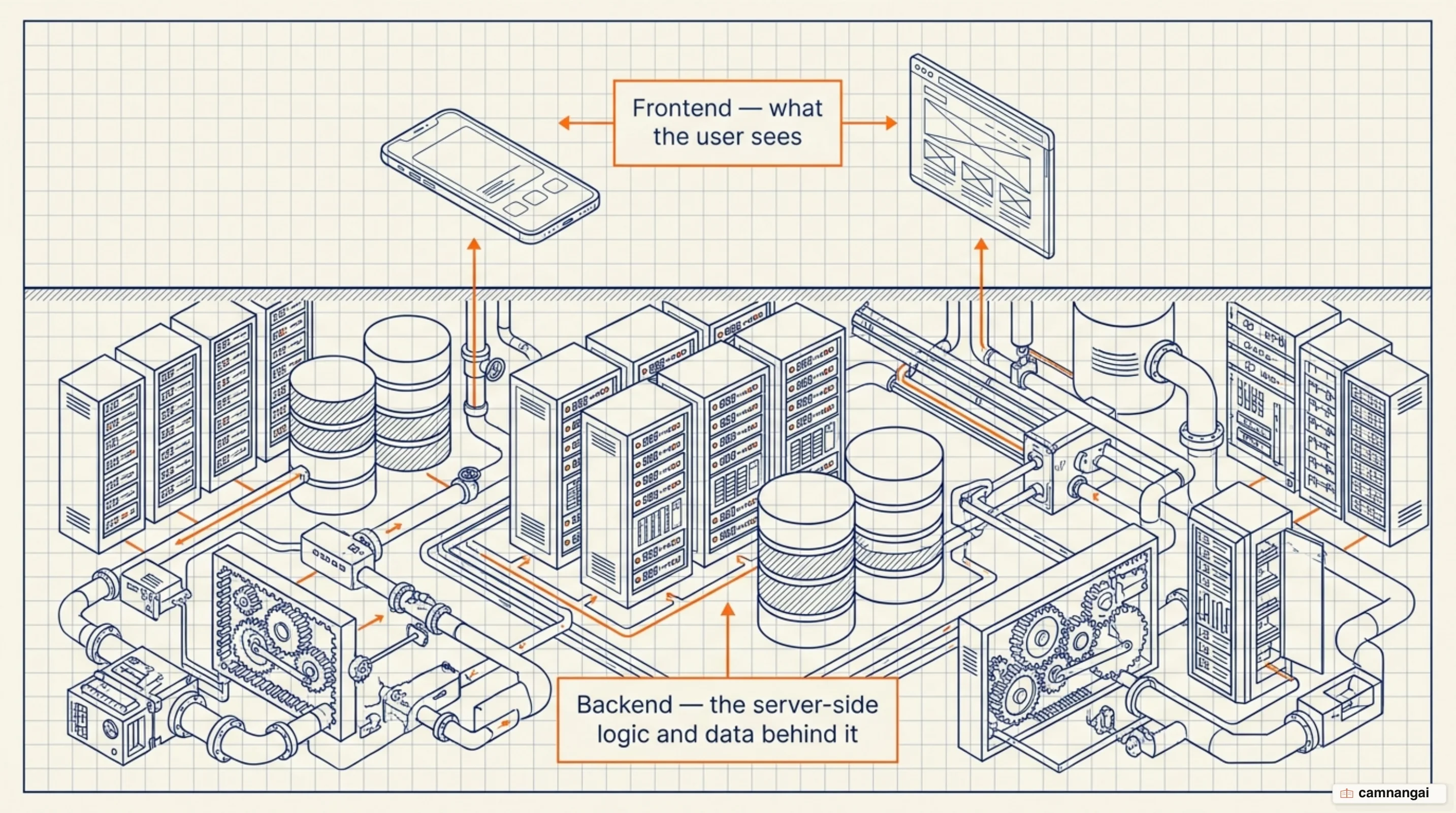
What is back-end development?
Back-end development is called "server-side" work because your code runs on computers you control, rather than on the user's local browser.
This is where the actual "work" of the application happens. While the front end is what a user sees, the back end is the hidden nervous system that stores, understands, and processes every byte of information flowing across the network.
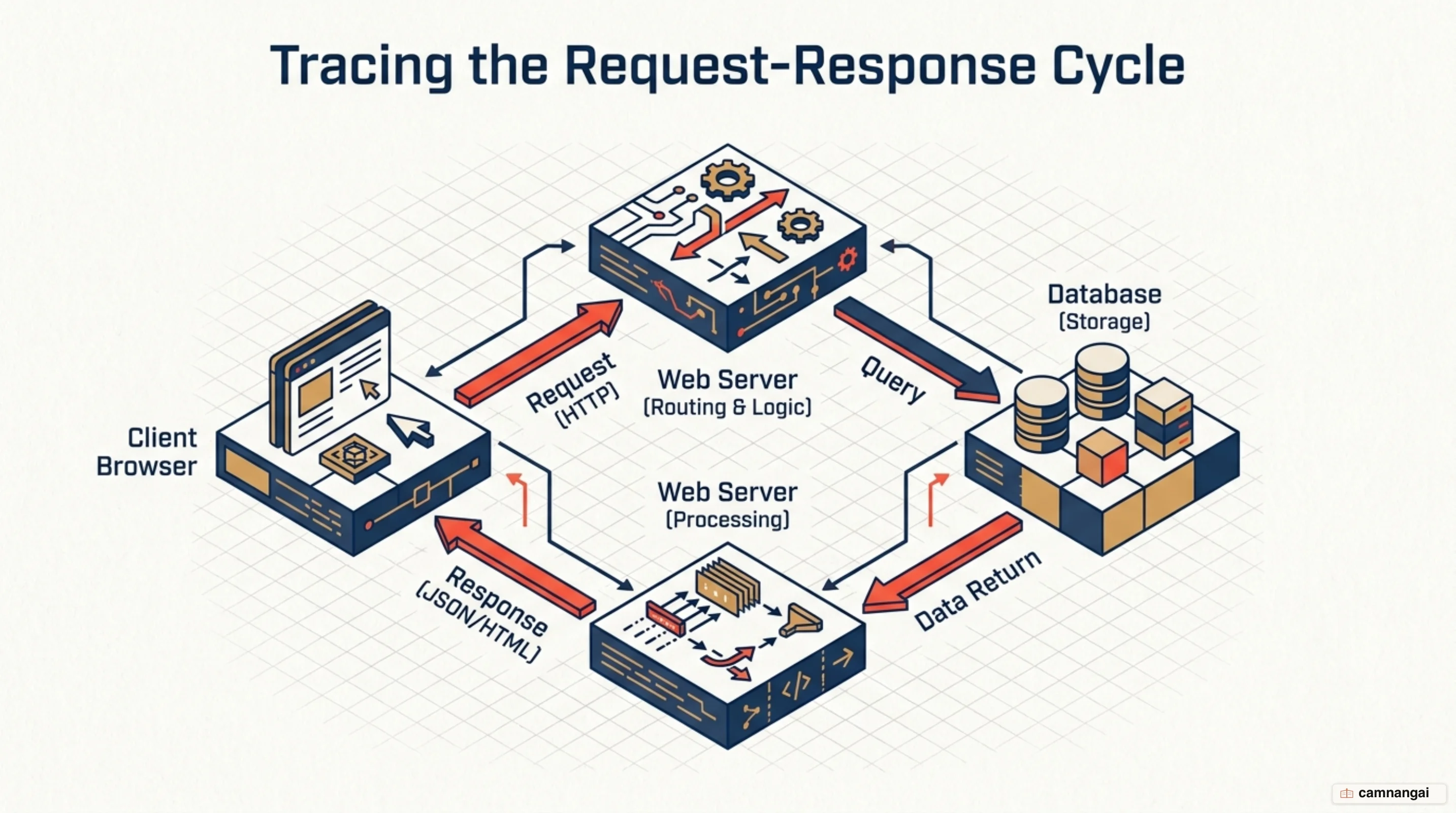
Formally, it is the process of building server-side logic and managing data processing. In practice, the back end is the reason an application does anything meaningful. It is the logic that crunches numbers for an analytics dashboard, the algorithm that determines which TikTok video you see next, and the encryption protocol that keeps a bank account from being drained by a script.
By 2026, the scope of the back end has expanded to include AI integration. Beyond serving data to a human-facing interface, you now manage the layer between large language models and the application's core logic. Modern back-end systems now govern retrieval-augmented generation (RAG) pipelines and the infrastructure that supports autonomous AI agents, making you the architect of machine intelligence.
You are building the infrastructure the internet runs on. Your code ensures that user authentication, permission management, and complex calculations happen reliably every time. By controlling the server environment, you can optimize performance so that even when your application scales to millions of users, the underlying systems remain stable and responsive.
How back-end differs from front-end and full-stack
To understand the difference between the "Front" and the "Back," you have to look at it from the user's perspective. For them, the web browser is the front—the interface where HTML and CSS create a visual experience. The back end is everything occurring behind that interface. While front-end developers focus on user experience and design, you focus on the efficiency and security of the application's logic and data management.
One of the greatest advantages you have on the back end is language flexibility. Front-end developers are largely trapped within the ecosystem of languages the browser understands, like JavaScript, TypeScript, or WebAssembly. Because you control the server, you can use almost any language you choose. This allows you to pick the best tool for the specific performance or data processing needs of your system.
Think of it through a food delivery analogy. The front end is the menu you browse and the button you click to place an order. The back end handles the reality: it queries the database for available items, processes the payment through a secure gateway, authenticates your account, and triggers the delivery logic. The front end makes the promise; the back end is what actually fulfills it.
If you handle both, you are a "full-stack" developer — though in practice, full-stack developers spend the vast majority of their time on back-end tasks. That reflects how much more complex server-side work is. Adjusting a UI layout is one thing, but maintaining data integrity and system infrastructure is a much deeper technical challenge.
The core components of a back-end system
Start with the servers, because everything else in the system sits behind them. Running on platforms like Apache or NGINX, they process incoming HTTP requests and deliver the correct content back to the user. Your server-side code runs here, managing the application logic, and it is the first thing every request entering your system touches.
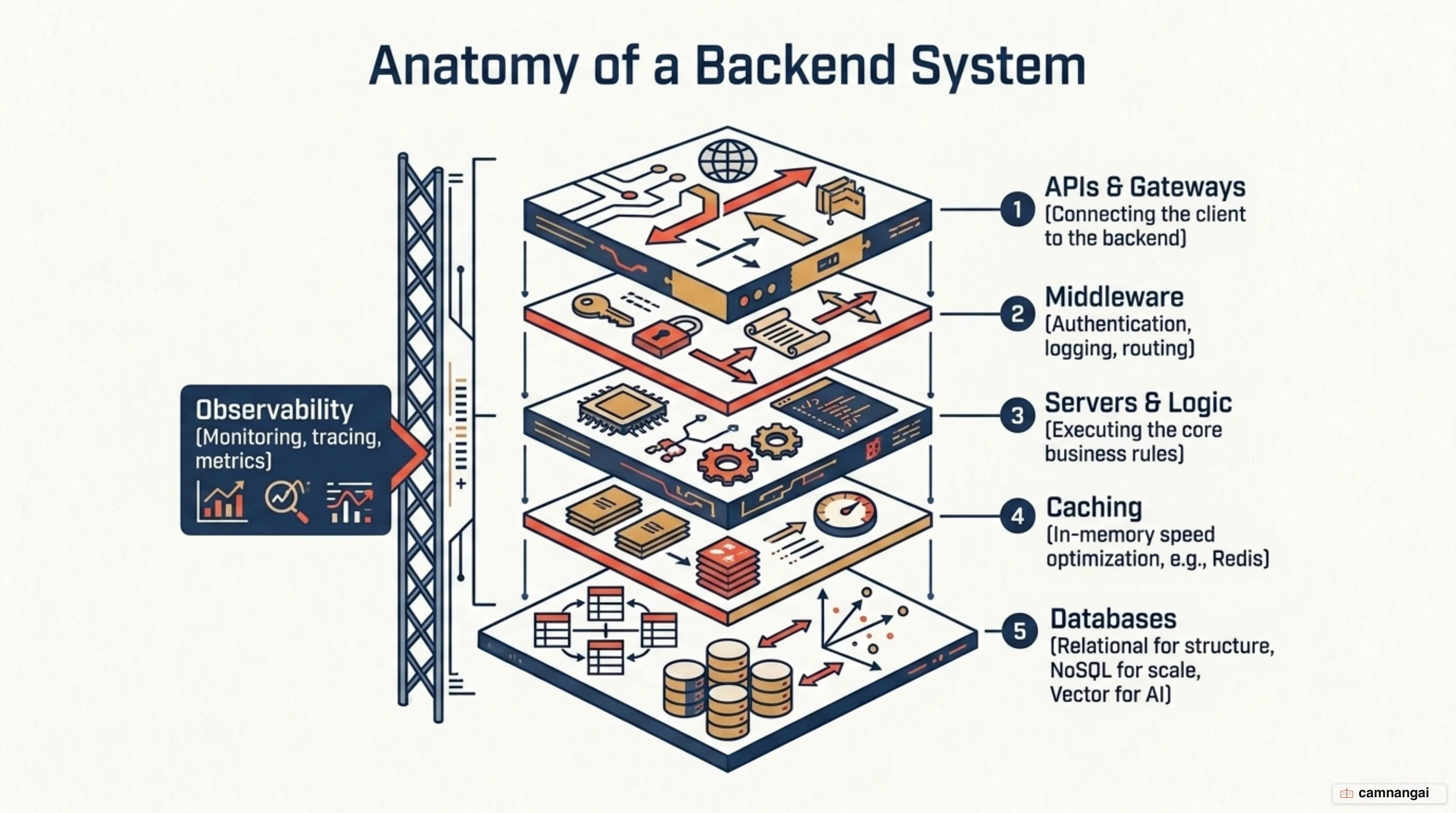
Databases are the storage engines of your application. You will work with Relational databases (MySQL, PostgreSQL) for structured data and NoSQL databases (MongoDB, Cassandra) for unstructured content like videos or PDFs. In 2026, you must also master Vector databases like Pinecone or pgvector. These store embeddings — numeric representations of meaning — that power semantic search and RAG pipelines, which are the closest thing an AI-powered application has to long-term memory.
Between all of those pieces sit your APIs and middleware, the connective tissue of the architecture. While traditional REST or GraphQL APIs provide the "recipes" for communication, the 2026 standard is the Model Context Protocol (MCP). MCP provides a unified interface that allows AI agents to discover and interact with your back-end tools and databases, so it complements the traditional endpoints you already have.
Caching and Observability are what keep your systems from collapsing under load. You use tools like Redis to store frequently accessed data in memory, slashing response times. For observability, you rely on OpenTelemetry for distributed tracing. This gives you visibility into complex request chains, which you need now that AI agents can generate interactions inside your infrastructure that are genuinely hard to debug.
Popular back-end languages and frameworks
When choosing your stack, you are balancing performance against developer velocity. As of 2026, Go is the fastest-growing language for high-performance systems, while Python remains the default for AI integration. JavaScript (via Node.js) is the most used because it allows for shared logic across the stack, and Rust is the "most loved" for its safety and speed.
You will typically use these languages with frameworks that provide structure and pre-built tools. Python developers lean on Django because it ships with almost everything, or on FastAPI for high-performance, AI-ready services. JavaScript developers generally stick with Express.js for its minimalist approach. For enterprise-grade reliability, Java with Spring Boot is the standard, while PHP with Laravel still runs a large share of the web's existing infrastructure.
The following table summarizes the market position of these languages and the companies hiring for them:
| Language | Category Winner | Hiring Companies |
|---|---|---|
| Go | Fastest growing | Uber, YouTube, Spotify |
| Python | Best for beginners/AI | Airbnb, SpaceX, Stripe |
| JavaScript | Most used | Meta, Google, eBay |
| Rust | Most loved | Meta, AWS, Discord |
| Java | Enterprise/Legacy | LinkedIn, PayPal, Netflix |
| PHP | Most likely to linger | Meta, Wikipedia, Slack |
While these frameworks are powerful, treat them as tools rather than crutches. Frameworks like Ruby on Rails or Laravel favor "convention over configuration" to help you ship faster, but the most successful architects are those who understand the core logic that the framework is trying to simplify.
How do you choose a back-end framework?
Your choice of a framework should be based on five metrics: development speed, AI integration, flexibility, scalability, and performance. If you need to ship a prototype immediately, "batteries-included" frameworks like Django or Ruby on Rails are your best bet. They provide built-in authentication and admin interfaces so you can focus on unique business logic rather than boilerplate.
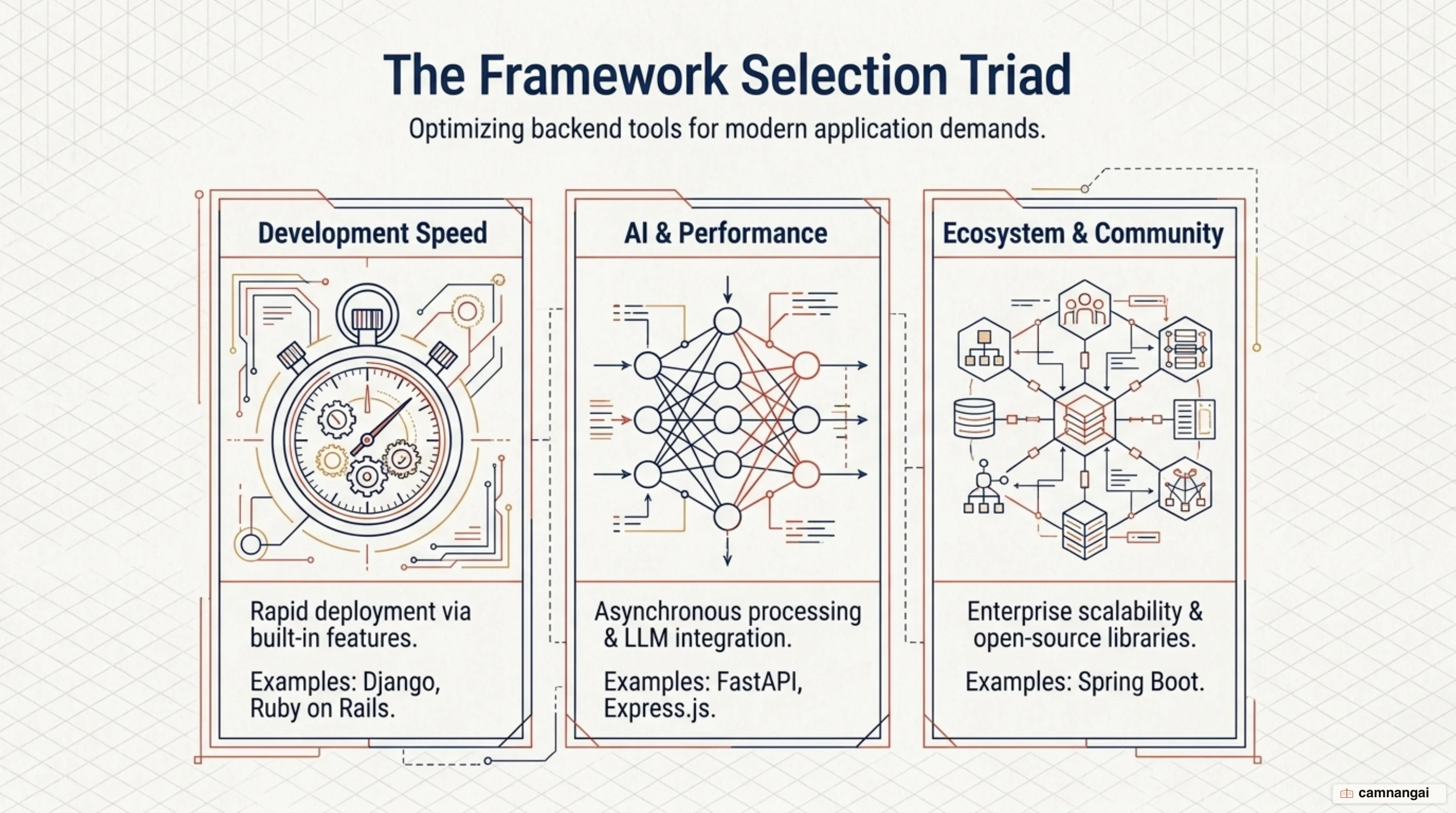
In 2026, AI integration is often the deciding factor. You will likely choose FastAPI or Express.js for AI-powered back ends because they are designed to handle asynchronous operations and streaming responses. This is critical when serving LLM outputs, where the user needs real-time data flow rather than waiting for a massive, single block of processed text.
There is also a trade-off between flexibility and scalability. Minimalist tools like Flask or Express.js offer high flexibility, letting you add only the libraries you actually need. However, for massive enterprise loads, Spring (Java) or Express.js are proven to handle high traffic. You will often see these paired with Kubernetes to orchestrate deployments and manage the heavy stateful workloads required for AI model serving.
Modern architects also prefer FastAPI for its automatic OpenAPI documentation. This allows AI agents to "discover" and understand your API endpoints without human intervention. If I had to name one default for a new back-end service, it would be FastAPI, and that documentation is most of the reason. When choosing a framework, you must decide if you need a lightweight tool for a specific microservice or a comprehensive framework to support a data-heavy enterprise application.
Security, testing and deployment on the back end
Security is your primary responsibility. You must defend against classic threats like SQL injection and buffer overflows, which remain persistent risks. Your baseline is HTTPS, using Transport Layer Security (TLS) for encryption and data integrity. You should also implement Multi-Party Authorization (MPA)—the "two-person rule"—to ensure no single individual can access or destroy sensitive media or data without explicit permission from another authorized party.
Testing is how you ensure your system survives the real world. Unit Testing checks individual components, Integration Testing ensures modules work together, and Functional Testing verifies the overall application behavior. Master your browser's Developer Tools as well; they are a critical asset for debugging real-time communication between the client and your server.
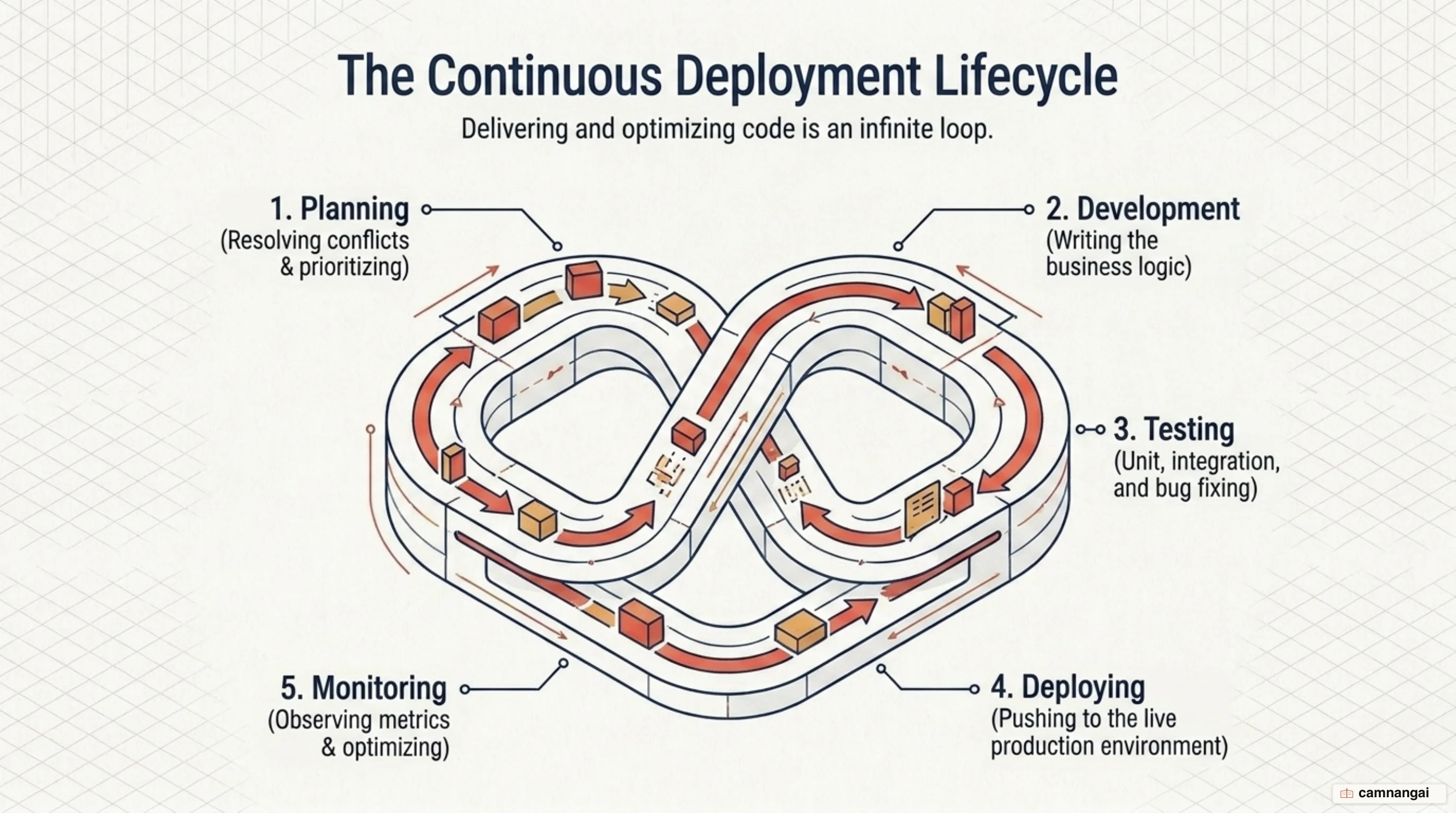
The deployment process follows a strict five-step lifecycle:
- Planning: Establishing a roadmap to prevent conflicts between developer changes.
- Development: Prioritizing requirements and writing maintainable code.
- Testing: Pushing to various environments to flush out bugs.
- Deploying: Moving finalized updates into the live production environment.
- Monitoring: Constant observation to catch post-release issues and optimize performance.
Containerization is the modern engine for this lifecycle. Docker allows you to package your code and its dependencies into an isolated container that runs anywhere. You then use Kubernetes (K8s) to automate the management of these containers across cloud providers like AWS, Azure, GCP, or Digital Ocean.
What does a back-end developer actually do?
On a daily basis, you are designing business logic, managing data integrity, and troubleshooting the bugs that threaten your system. You are the one who turns an intuitive prototype into a functional website with cross-platform compatibility. You will spend a significant amount of time collaborating with front-end teams to define "API contracts"—the strict rules that govern how the two halves of your application exchange data.
In this field, there is a technical distinction between a "Developer" and an "Engineer" that relates to the scope of failure. A developer typically handles functional units and proves specific design methods are viable. An engineer is a "big-picture" architect who designs the system so that one developer's mistake doesn't take down an entire AWS region.
The market for these skills is strong. Demand is projected to grow by 7% over the next decade, driven by the universal need for secure data management and the rising complexity of web-based software.
You also measure how the application holds up as the user base grows. You are expected to lead training and mentorship for junior developers so they follow clean code principles. Because you own the layer everything else sits on, your architectural decisions shape what the product can still do years later.
How AI is changing back-end work
The rise of AI agents like Claude Code and GitHub Copilot has shifted your role from a "coder" to a reviewer and architect. In 2026, much of the boilerplate and logic is generated by AI. Your value now lies in your ability to review this code for quality and security, rather than manually typing it out.
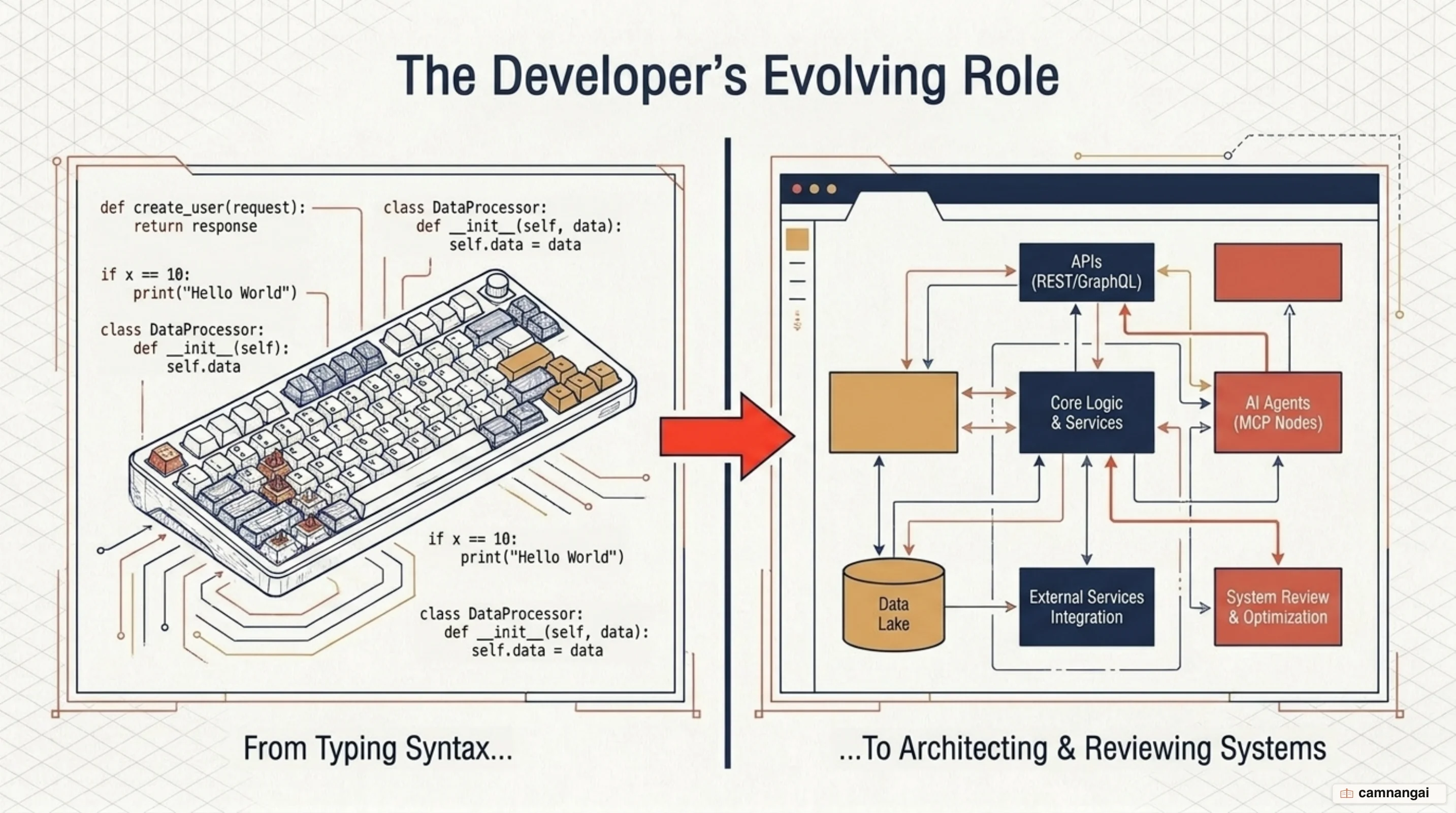
The biggest risk you face today is "AI technical debt." AI agents often introduce patterns of debt that are invisible at first glance. To counter this, the industry has moved toward mandatory formal code verification. You must ensure that AI-generated logic meets rigorous performance standards and does not introduce security vulnerabilities that could compromise the entire system.
You must also master the Model Context Protocol (MCP). Just as REST was the standard a decade ago, MCP is now how you expose back-end capabilities to AI agents. You now architect for AI models as well as human users: systems that can be "consumed" by models that need to interact with your databases and tools through standardized interfaces.
The shift toward "agentic workflows" also requires you to rethink data storage. Traditional databases are being supplemented with knowledge bases optimized specifically for AI consumption. This evolution means your work is increasingly about building the infrastructure that allows AI agents to function as autonomous participants in your software ecosystem.
Where to start learning back-end today
Your roadmap starts with a foundational language. For 2026, Python is the strongest pick for its AI dominance, and Go for its high-performance industry adoption. Focus on writing clean, logical code and understanding how your chosen language handles data before you even touch a framework.
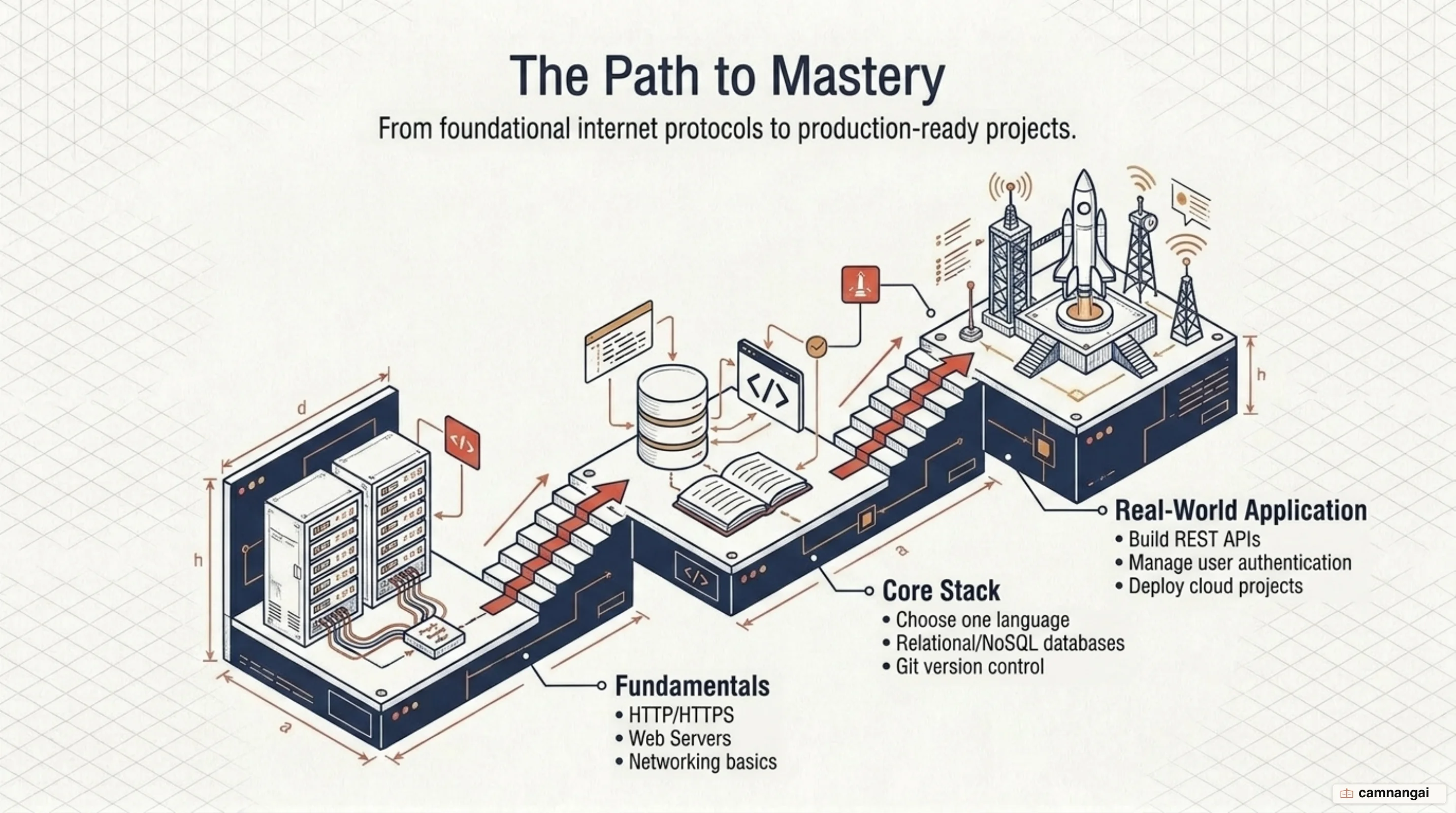
Next, you must master version control. Git and GitHub are non-negotiable. You need to know how to track changes, manage branches, and merge code without destroying your teammates' work. This is your primary safety net; it allows you to revert changes when things go wrong and collaborate effectively in a professional environment.
Once you have the language and Git down, dive into web servers and databases. Learn the fundamentals of HTTP and how servers like NGINX deliver content. Simultaneously, master SQL. You must understand how to store, retrieve, and organize data in a relational database like PostgreSQL. Always remember the architect's mantra: "bad data equals a bad back end."
Finally, learn to build and document APIs. This is the bridge between your logic and the outside world. Focus on RESTful principles and modern protocols like MCP. Do not take "framework shortcuts." If you use a framework to bypass learning these fundamentals, you will find yourself unable to troubleshoot the complex architectural issues that define a senior-level career.
The architectural thinking AI can't replace
Back-end development is the foundation the rest of an application sits on. As applications become more data-centric and AI-integrated, server-side work gets more complex, not less. That shifts what the job asks of you: you write less of the code yourself and oversee more of the automated systems that produce it.
By mastering the core components of servers, databases, and APIs, you cover what most modern software actually runs on. The work you do behind the scenes decides whether those systems stay stable and secure, and when one of them falls over at scale, nobody opens the CSS file.