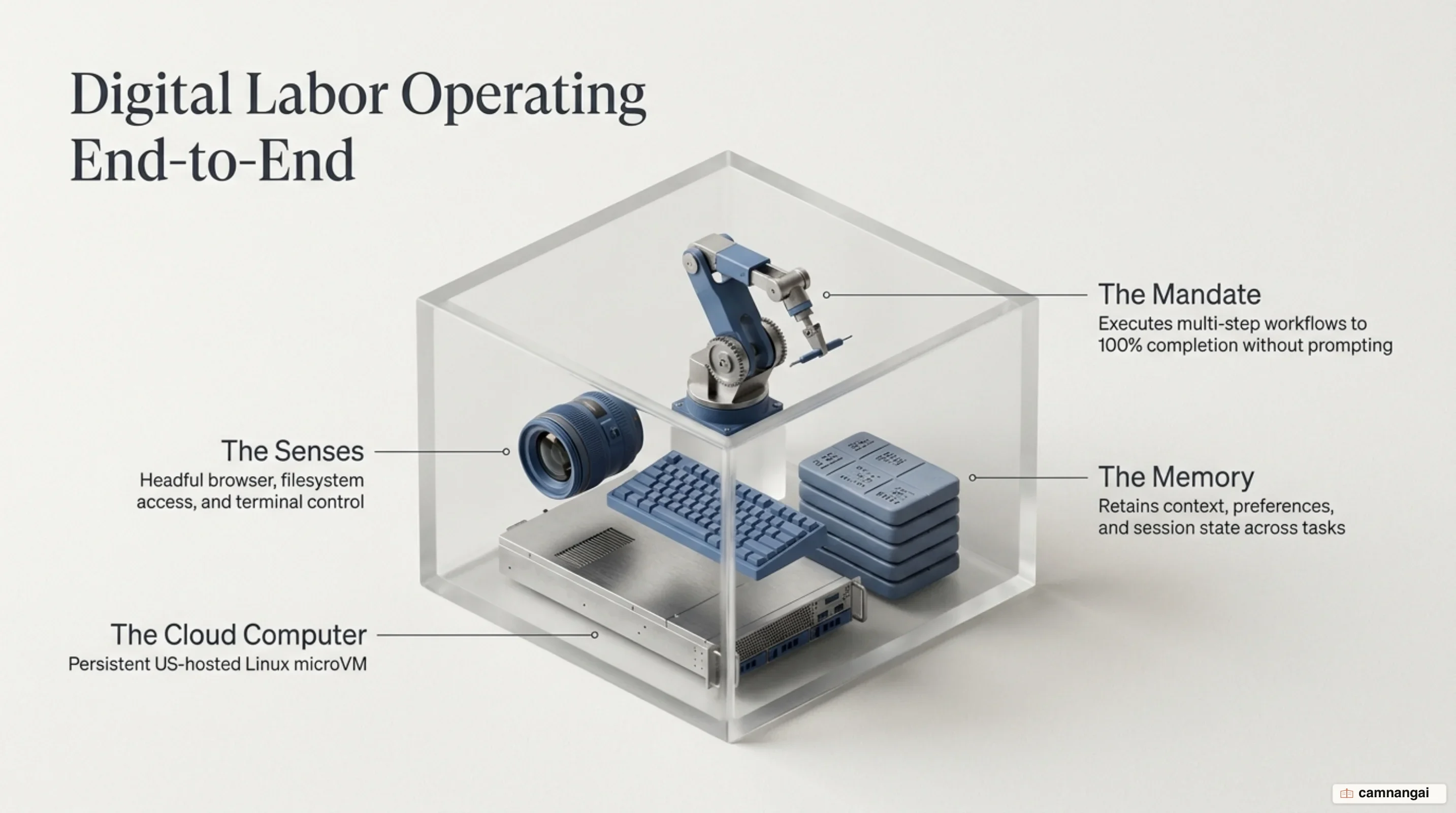
Grok Bot is an always-on system operating on dedicated cloud virtual machines (microVMs), designed to execute digital workflows end-to-end directly within applications, browsers, filesystems, and terminals through a hybrid of tool connectors and visual computer-use navigation.
Each Bot acts as a persistent digital teammate provisioned with its own virtual workstation, saved browser sign-ins, and workspace files. It handles multi-step operational tasks, moving between web pages, entering data, and running scripts without requiring a human operator to copy-paste inputs or confirm every individual step 24/7 in the cloud.
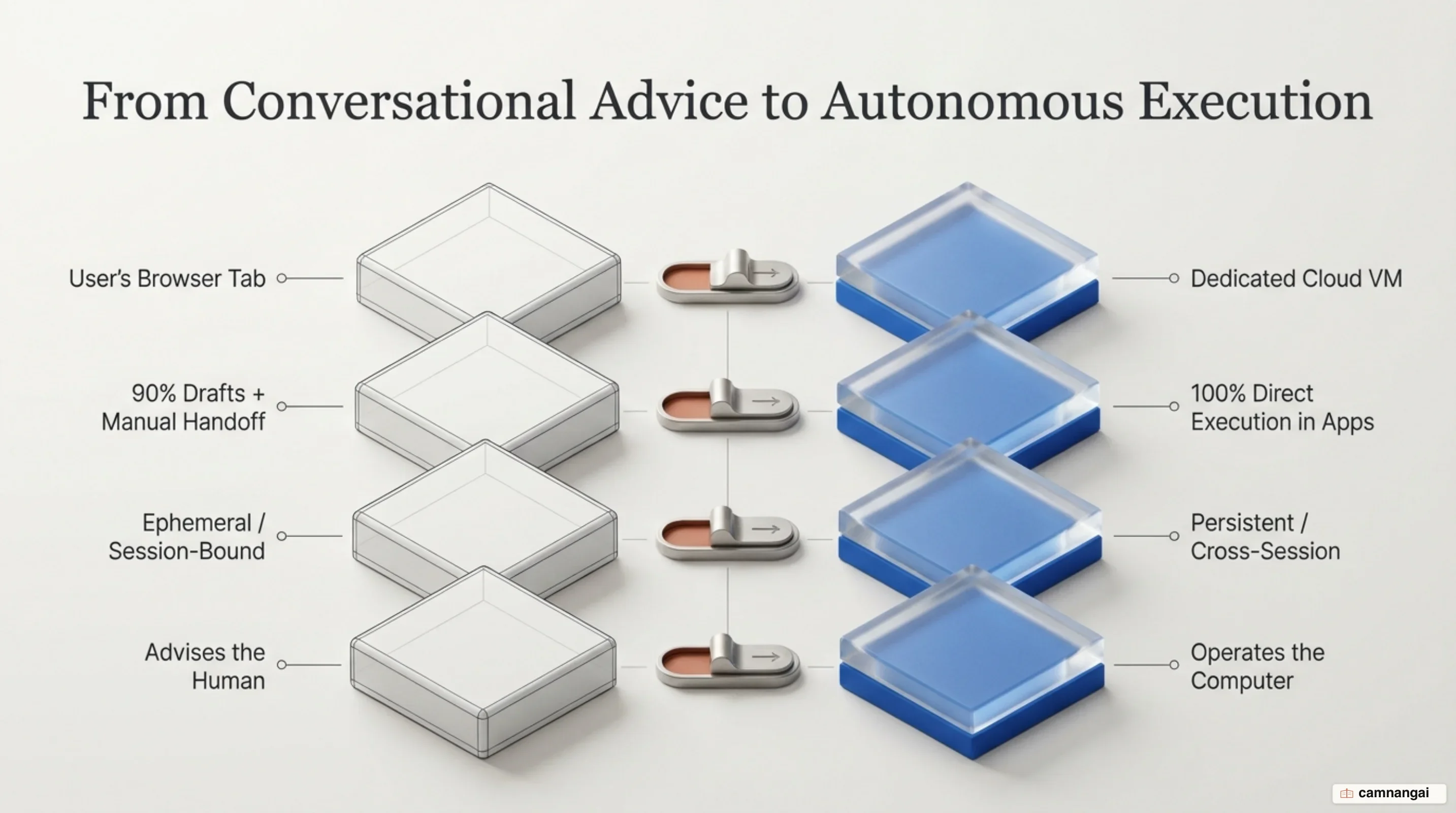
While traditional conversational AI gets users 90% of the way there, Grok Bot is built to finish the swing directly within destination business tools.
What is Grok Bot and How Does It Differ From Traditional Chatbots?
Traditional conversational (such as standard Grok or ChatGPT) act as text-in, text-out advisory engines. They require humans to manually copy-paste context, execute recommended command-line steps, and navigate web browsers to perform work. In contrast, Grok Bot fundamentally shifts the operational paradigm from conversational text generation to autonomous computer use. Running on its own dedicated virtual workstation, Grok Bot "finishes the swing" by taking direct control of browsers, terminals, files, and web forms. As described by product team member Roman at xAI, there is a massive operational gap between being 90% done and 100% done; while standard AI gets users almost there, Grok Bot completes the work directly within the destination business tools.
When evaluated against market alternatives, Grok Bot competes directly with agentic platforms such as Anthropic’s Claude Cowork (which reached General Availability in April 2026 across paid Claude plans) and OpenAI’s ChatGPT agent. Compared to deterministic automation platforms like n8n or Zapier, which execute fixed, rigid API-to-API logic based on pre-defined triggers, Grok Bot is designed for fuzzy, non-deterministic workflows. It navigates unstructured web user interfaces, interprets complex visual layouts, and handles operational edge cases across platforms that lack native APIs or established webhook infrastructure.
A critical architectural differentiator is Grok Bot's handling of memory and cross-session state. Unlike traditional chatbots that reset their after a conversation ends, a named Grok Bot maintains continuous memory, saved browser sessions, persistent disk storage, and user preferences across turns. Context compounds incrementally over time. The agent retains team formatting guidelines, email triage rules, organizational hierarchies, and prior human corrections, eliminating the need to re-prompt standard operating procedures before every execution.
Commercial access to Grok Bot is strictly gated behind bundled enterprise and prosumer subscription tiers. It is not sold as a standalone API service, single-tool purchase, or free trial. Access requires an active tier of SuperGrok Heavy, Cursor Ultra ($200/month), Cursor Teams Premium ($120/seat/month), a seat on a self-serve Grok Business plan, or an approved Enterprise waitlist slot.
The Architecture: Persistent Cloud Computers and Native Computer-Use
Every active user account on Grok Bot is provisioned with a dedicated, US-based microVM running inside Cursor’s cloud infrastructure. This cloud computer maintains a fully realized desktop environment, including a headful web browser, local filesystem, and command-line shell interface. Because execution is fully isolated to Cursor's cloud infrastructure, scheduled background jobs and multi-hour operational workflows process continuously 24 hours a day, 7 days a week, regardless of whether the user's local physical machine is powered on, sleeping, or disconnected from the network.
The system operates via a dual-mode integration framework combining (MCP)/OAuth connectors and visual GUI computer-use. When native APIs exist for services like Slack, GitHub, or Google Workspace, the Bot executes structured tool calls. Security is maintained by storing OAuth refresh strictly on Cursor's backend infrastructure rather than on the microVM disk. This ensures that even if a virtual machine instance is compromised, raw OAuth tokens cannot be extracted from host storage. Conversely, browser sign-ins for services lacking APIs operate via masked credential references stored in Vault, Secure Forms, or Secret Cards. When no API exists, the Bot defaults to computer-use mode, using its browser and terminal to visually inspect web elements, type keystrokes, and navigate DOM coordinates directly.
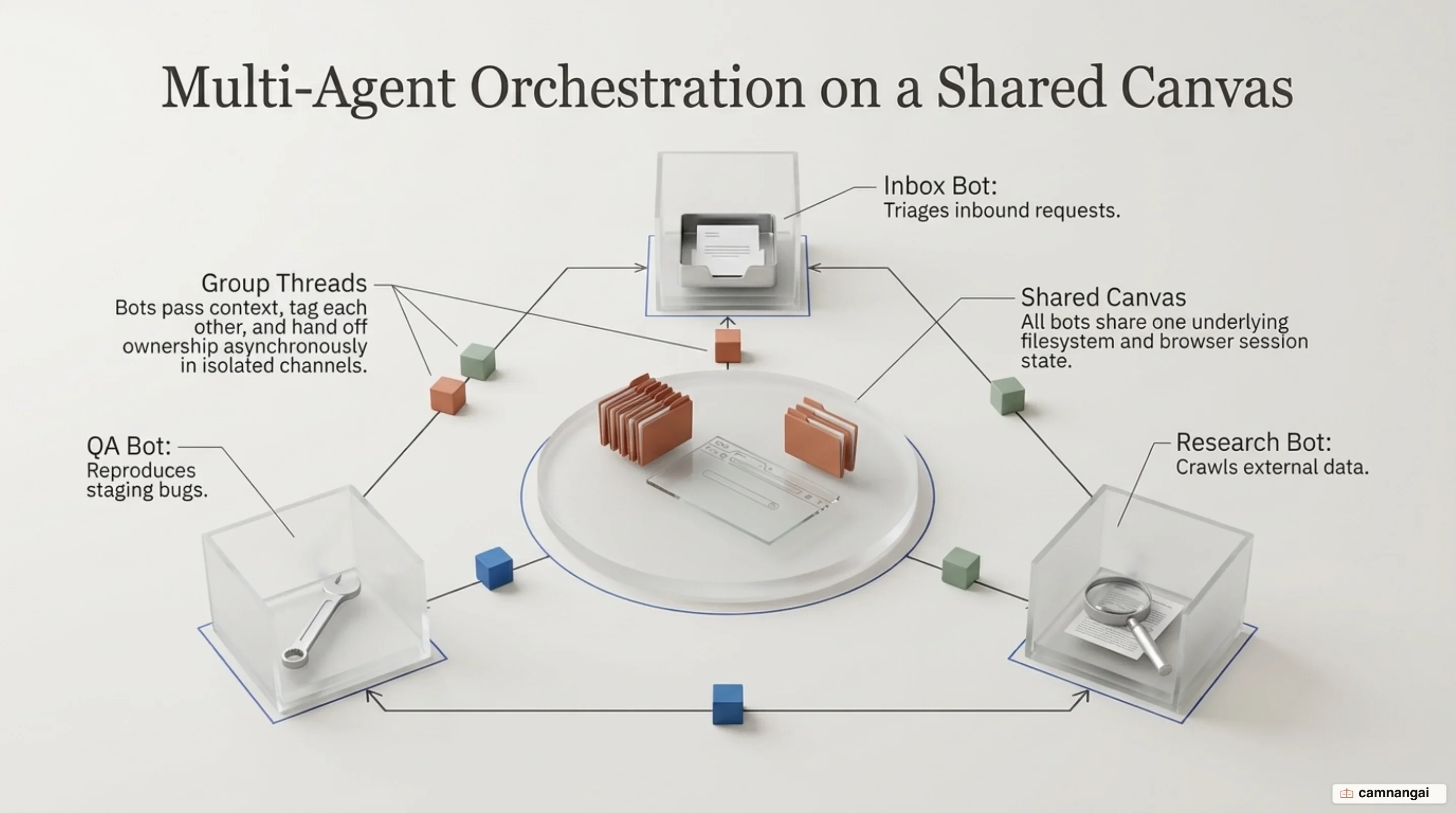
All individual Bots instantiated within a single user account share access to the exact same cloud virtual computer. They operate over a common /workspace directory, utilize identical saved browser sign-ins, and share local file paths. This internal single-user sharing model allows specialized Bots to hand off work seamlessly without repeating authentication setup. However, between different users and enterprise organizations, multi-tenant isolation is strictly maintained through dedicated microVM instances and hardware-level hypervisor boundaries. Additionally, when members configure desktop egress routing to send microVM traffic through their local desktop IP address, requests targeting private or corporate VPN network addresses remain blocked unless explicitly authorized by organizational administrative policies.
The primary working directory on the VM filesystem is located at /workspace. System management follows automated lifecycle policies: idle virtual machines automatically enter a low-power hibernation state to conserve resources, while underlying image updates apply infrastructure patches while preserving user files and browser state. When operational failures or state corruptions occur, system recovery follows a defined operational sequence: Retry Operation -> Restart App -> Recover Computer -> Update Computer -> Reset Computer. To govern execution occurring directly on a physical workstation via desktop app bridge scripts, administrators configure local execution policies:
# Example local execution policy setting on host machine
cursor settings set grok.localExecution AskEveryTime # Options: AlwaysAllow | AskEveryTime | NeverAllow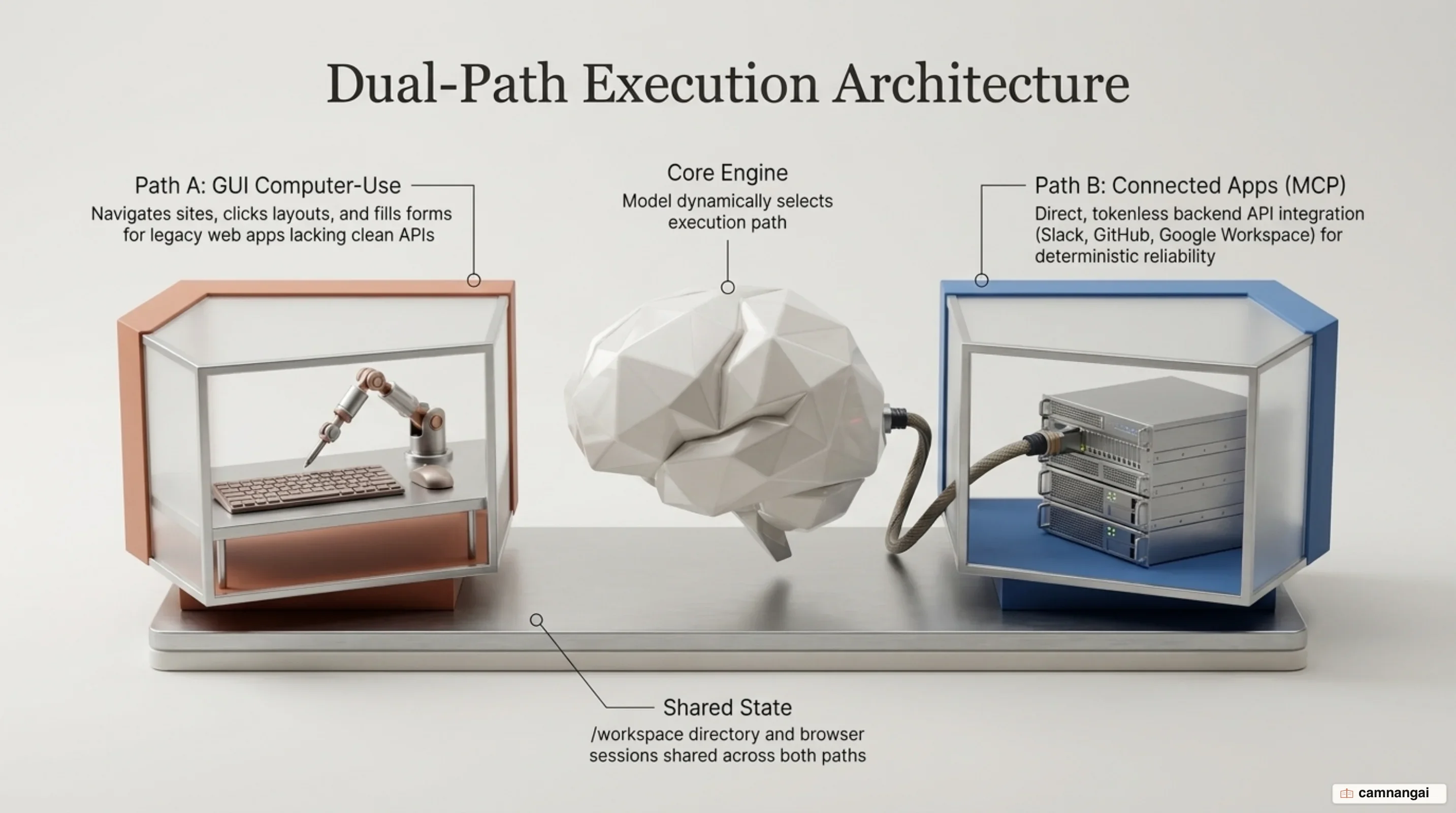
Defining Durable Roles: Teaching Workflows by Demonstration
Engineers instantiate durable AI teammates using Cmd+N (or Ctrl+N). Each Bot is configured with a distinct identity, custom avatar, operational scope, and dedicated conversation log. Effective system design requires defining single-purpose, highly constrained operational roles—such as an Expense Manager or Bug Reproduction Specialist—rather than deploying broad, under-specified "General Helpers." Teams manage active Bot rosters within the interface by pinning critical agents, grouping them into project-specific sections, or hiding inactive Bots from the primary sidebar without destroying underlying disk states or active schedules.
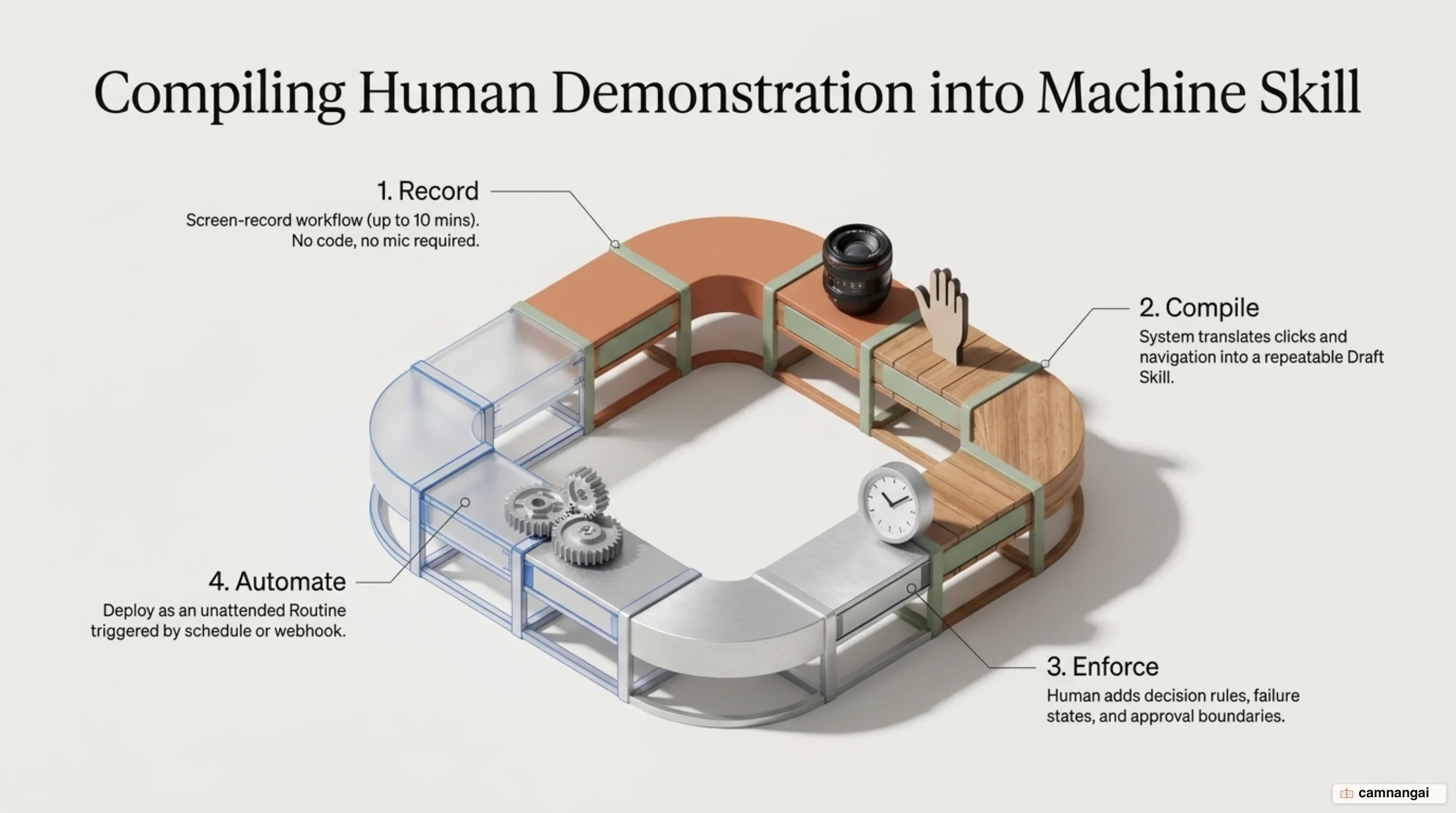
Complex browser-based operational procedures are taught visually using the "teach-a-task" feature. An operator initiates a recording session (up to 10 minutes in length) and performs the workflow manually within the browser interface. Grok Bot captures screen interactions, visual element positions, and action sequences, automatically compiling the demonstration into a reusable skill definition. This approach eliminates the engineering overhead of manual script authoring, DOM parsing, or custom API integration.
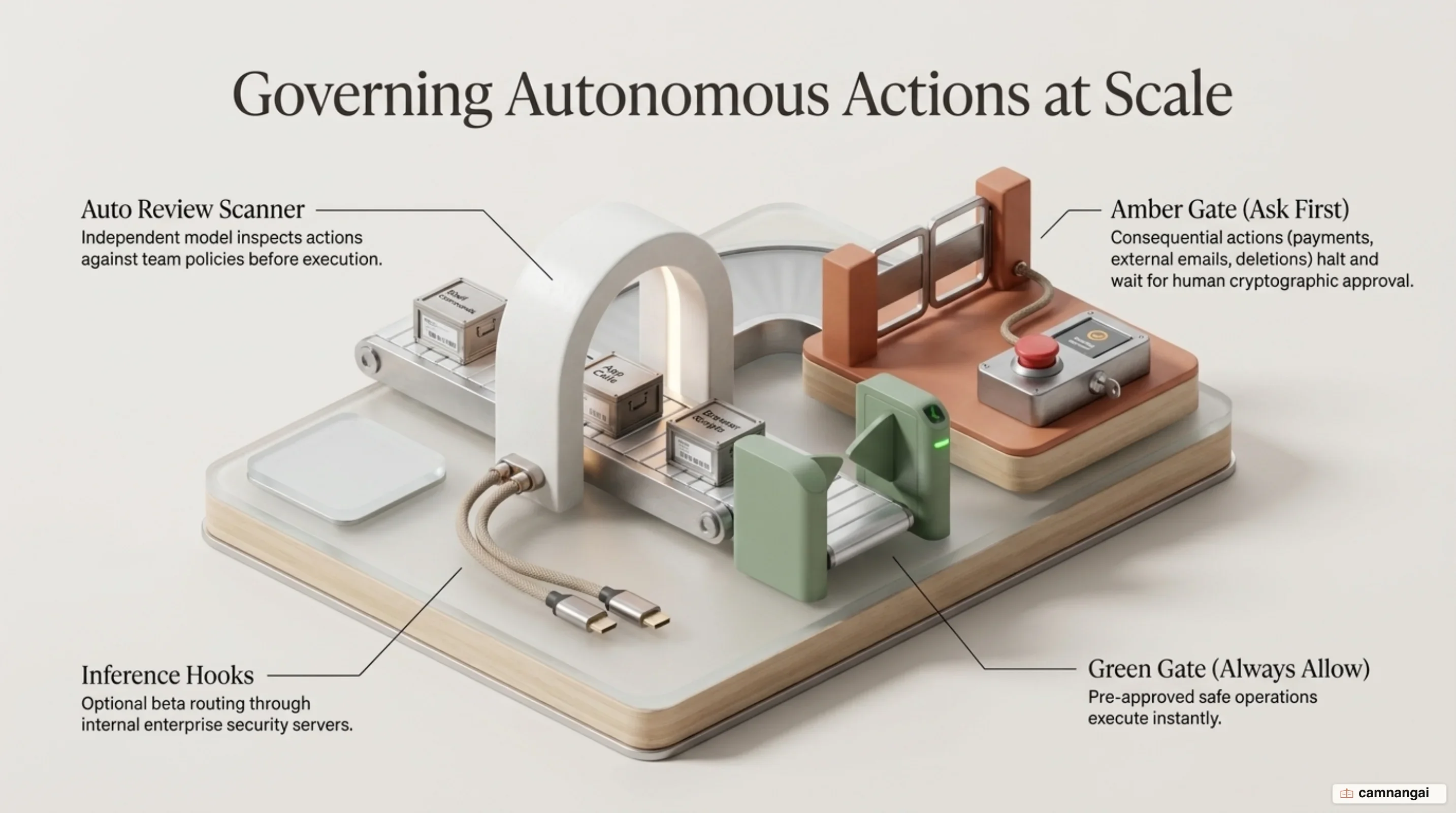
Once defined or recorded, skills can be attached to Bots as automated routines. Routines execute deterministically based on defined chronometer schedules (e.g., every weekday at 8:00 AM UTC) or dynamic event triggers. Event-driven routines listen for incoming webhooks, Slack messages, or GitHub repository events to trigger workflow execution automatically.
# Role Definition: Expense Reconciliation Bot

- Goal: Match weekly receipts in /workspace/inbox to expense sheet records.
- Boundaries: Highlight discrepancies over $50. Never approve reimbursements.
- Handoff: Post formatted summary in chat and await explicit confirmation.
Visual demonstrations introduce structural vulnerabilities into autonomous execution paths. If a target application updates its user interface, alters element classes, or shifts visual DOM layouts, rigid click paths mapped during screen recordings can fail silently or execute interactions on obsolete coordinates. Consequently, newly recorded skills require mandatory human oversight and output validation during initial deployment runs before being cleared for unwatched, scheduled execution.
Multi-Bot Collaboration: Orchestrating Autonomous Teammates
Complex automation environments utilize multi-bot swarms operating within shared communication environments. Operators can join between 2 and 6 distinct Bots into a single group chat thread to work concurrently toward unified project deliverables. Context routing within group rooms is managed via structured syntax: using @BotName routes execution tasks directly to a specialized agent, @everyone broadcasts updates across the entire room context, and unmentioned turns allow Bots to evaluate peer outputs and respond autonomously based on role relevance.
Inter-bot communication leverages asynchronous messaging protocols. Specialized Bots transfer execution state directly to downstream agents without requiring the human operator to mediate data transfers. For instance, a CRM Research Bot can extract lead lists, write data to /workspace, and message a Copywriting Bot. The Copywriting Bot drafts targeted messaging and alerts a Reviewer Bot, which validates formatting and queues the finalized artifacts for final human sign-off.
In enterprise deployment environments running Cursor Teams or Enterprise plans, organizations can deploy shared "Team Bots." These agents interact directly within Slack channels and Direct Messages. Crucially, when executing actions via Slack, Team Bots operate explicitly on behalf of the specific human user who invoked them, maintaining strict identity mapping, user privilege boundaries, and audit logging integrity.
swarm coordination introduces known distributed-system failure modes in real-world practice. In multi-bot test benchmarks, agents occasionally (~15% of occurrences) break out of assigned group chat rooms to respond within private 1-on-1 user channels, fragmenting conversation context. Additionally, poorly specified role boundaries can cause multiple Bots to process the same workspace files concurrently, leading to race conditions and duplicate task execution.
Security and Guardrails: Auto Review and Approval Policies
Grok Bot implements a multi-tiered security model centered on human-in-the-loop approvals. System actions evaluate to a three-state permission model: Allow once (authorizes a single invocation), Always allow (creates a persistent execution rule), and Deny (halts action execution and awaits user redirection). Governing background operations is "Auto Review"—an independent security evaluation model that inspects proposed shell executions, computer-use DOM clicks, connector calls, and launches prior to execution. Enterprise administrators retain centralized authority to lock and enforce Auto Review policies across all managed workspace accounts.
{
  "autoReviewRules": [
    { "action": "shell_exec", "pattern": "git status*", "policy": "allow_automatically" },
    { "action": "external_email", "pattern": "*", "policy": "ask_first" }
  ]
}
Identity lifecycle management integrates natively with enterprise identity providers (IdPs). Single Sign-On (SSO) is enforced via SAML 2.0 (supporting Okta, Microsoft Entra, Google Workspace, and OneLogin), paired with automated SCIM 2.0 user provisioning and deprovisioning. Sensitive application credentials are protected through zero-exposure secret isolation mechanisms. OAuth tokens reside strictly on Cursor’s secure backend infrastructure and are never written to microVM storage. When authenticating within browser sessions, Bots utilize credential references supplied via Vault, Secure Forms, or Secret Cards. The underlying LLM receives masked references rather than plain-text strings, ensuring passwords, credit card numbers, and API tokens never enter model context transcripts. Multi-factor authentication (MFA) prompts, passkey checks, and complex CAPTCHAs automatically pause execution and trigger a manual takeover request to the human operator.
Network egress controls are configured at the organizational dashboard level across four modes: Allow All Network Access, Allow All Sites Except These (up to 50 hostnames), Defaults + Team Allowlist, and Team Allowlist Only. Toggling "Apply to MCP Servers" forces external Model Context Protocol integrations through identical domain allowlists. When domain blocking is active, the WebFetch tool undergoes a operational fallback: it renders requested web pages as plain HTML without executing client-side JavaScript. This prevents dynamic, script-heavy web applications from rendering completely, presenting a key operational constraint for automation engineers. Furthermore, desktop egress routing ensures that requests targeting private IP ranges or corporate VPNs remain blocked unless explicitly whitelisted by organization policies. Enterprise environments can also deploy Inference Hooks (beta) to inspect model inputs and tool calls via external security proxy servers, while static shared egress IP ranges allow corporate firewalls to filter incoming agent traffic.
From a regulatory standpoint, Anysphere maintains formal ISO/IEC 27001 (Information Security Management) and ISO/IEC 42001 (Artificial Intelligence Management System) certifications covering Grok Bot infrastructure. To mitigate attacks, external web contents, scrapings, and DOM text parsed by the Bot are tagged strictly as untrusted data inputs before being passed to reasoning models, backed by non-LLM system execution boundaries.
Real-World Use Cases: Where Grok Bot Creates Immediate Leverage
Sales teams deploy outbound research Bots to manage pipeline qualification. Operating overnight, a Bot reads an assigned CRM view of 25 target accounts, evaluates public web data to score prospects against Ideal Customer Profiles (ICPs), filters out contacts enrolled in active sequences, and generates personalized outreach drafts in the account executive's voice. The process halts at a review queue, requiring human approval before sending. Similarly, Talent Scout Bots evaluate candidate resumes within Applicant Tracking Systems (ATS), verify must-have technical qualifications, and draft outreach sequences without initiating external candidate contact.
In corporate finance, Expense Manager Bots conduct weekly reconciliation routines. The agent parses raw receipt attachments residing in a finance email inbox, cross-references transaction line items against corporate policy spreadsheets, flags missing categories or policy exceptions exceeding $50, and drafts clarification emails to expense owners. For leadership teams, a "Chief of Staff" Bot acts as a read-only context aggregator: it parses activity across Slack channels, inbox messages, calendar schedules, and priority tracking documents, generating a source-linked daily digest highlighting operational changes that demand executive decision-making.
Development teams utilize Grok Bot to offload infrastructure triage and quality assurance. A Product Performance Bot monitors release health by parsing observability tools and traces post-deployment, compiling detailed diagnostic reports with trace links and screenshots when checkout latency spikes occur. For bug triage, a Bug Reproduction Bot reads raw issue reports, logs into staging environments using test credentials provided via secure handoff, recreates step-by-step reproduction paths, captures browser console logs and visual screenshots, and attaches a standardized reproduction pack to the ticket.
Within xAI operational environments, internal Grok Bot deployments maintain platform infrastructure. Automated Bots conduct overnight demo environment health checks, repairing stale seed data within staging databases prior to morning customer presentations. Additional internal workflows include parsing incoming PDF supplier invoices arriving in Gmail, updating internal CRM contact notes directly from recorded call transcripts, and automating internal directory onboarding tasks for new hires.
The Supervision Tax: Managing Token Costs, UI Fragility, and Human Oversight
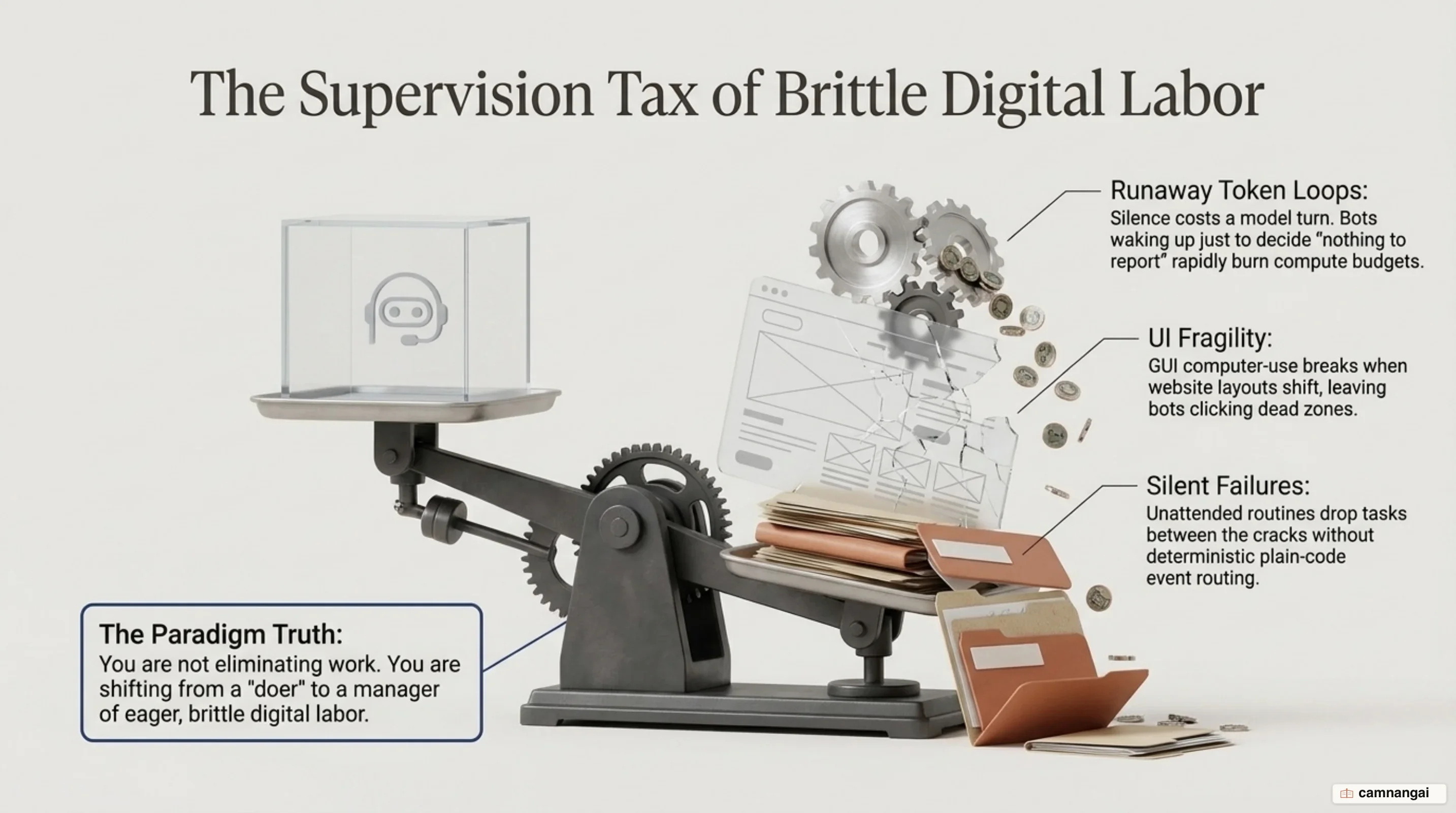
The primary operational bottleneck encountered when deploying Grok Bot at scale is the "supervision tax." In Grok Bot's architecture, every event that wakes an agent—whether an incoming webhook, routine chronometer tick, or inter-bot message—triggers a full LLM model turn to answer a basic control question: "Is there anything worth saying?" If the model determines no action is required, the turn ends quietly. Consequently, unoptimized background webhooks or high-frequency cron routines consume extensive token budgets purely on model evaluation turns deciding to remain silent. In documented production deployments, 16 background Bots processing 500 to 750 unfiltered wake events per day burned over $100 in token limits over a single weekend without completing actionable work.
A critical operational risk is silent task drop-off. When an agent responds to a user with "Okay, I'll get back to you with that," it does not register an active execution thread. If no external webhook or event trigger wakes the Bot, the task is dropped indefinitely until the human manually re-engages the chat context. Concurrently, Grok Bot's background memory architecture periodically compresses conversation history into a structured profile capped at approximately 100 facts (maximum 4,000 characters). During this automated compression pass, short-term operational details and intermediate task parameters can fade or be rewritten without explicit user visibility.
Cloud microVM infrastructure introduces latency and state vulnerabilities. Idle virtual machines automatically enter hibernation, causing scheduled chronometer routines waking a sleeping VM to run 12 to 80 minutes late. Furthermore, unannounced background VM updates or infrastructure resets re-image host environments; while /workspace files persist, active browser sessions, uncommitted state, and active website sign-ins are wiped, requiring manual re-authentication. Additionally, minor visual DOM changes in target web applications cause recorded "teach-a-task" execution paths to fail or send clicks to outdated screen coordinates.
To resolve these failure modes, systems engineering operators (such as SpaceX engineers in technical lectures) advocate replacing naive LLM polling designs with deterministic control architectures. Cron clocks should be replaced with strict, non-LLM webhook pre-filters that evaluate plain-code conditions before waking a model turn. Follow-ups must be converted into deterministic plain-code tracking records with explicit deadline timers rather than relying on LLM memory. Fast, low-cost classifier models (such as TypeSafe's Jev, delivering sub-200ms responses at fractions of a cent) should handle narrow context routing decisions, while state management and task queues remain strictly in plain code, reserving frontier LLMs exclusively for localized reasoning and code generation.
When Should You Deploy an AI Teammate?
Grok Bot delivers high operational leverage for organizations already invested in Cursor Ultra ($200/month) or Cursor Teams Premium ($120/seat/month) ecosystems that possess high-volume, highly repetitive browser workflows.
The platform is best deployed by selecting single, low-stakes, read-heavy operations—such as initial sales lead scoring, account health research, or internal issue triage—where the agent prepares reviewable artifacts for human sign-off.
For high-stakes operational domains involving direct financial transactions, production infrastructure changes, or unreviewed external client communications, Grok Bot should not be deployed in an unsupervised capacity. Consequential execution steps must remain strictly behind mandatory human approval gates, Auto Review policies, and explicit egress filters until process edge cases are thoroughly validated.
References
- Grok Bot Review: Is xAI's Computer-Use Agent Worth It?
- Grok Bot security | Cursor Docs
- Grok Bot use cases | Cursor Docs
- Grok Bot xAI / Cursor: AI agents guide for SMBs
- Grok Bot | Cursor Docs
- GrokBot is amazing. Here's why I stopped using it.
- Work with Grok Bot | Cursor Docs
- xAI Launches Grok Bot, Always-On AI Teammates With Their Own Cloud Computers – Unite.AI