Modus is an infrastructure layer built to close the "context gap" in enterprise AI. It works as a context warehouse: a system of understanding that gives AI agents the specific business knowledge, expertise, and norms a task requires, so every model interaction is grounded in a current map of the organization rather than in whatever happened to be retrieved.
The thesis behind it is that enterprise agents fail from a shortage of business understanding, not a shortage of data. Organizations have spent decades centralizing records in warehouses like Snowflake or BigQuery, and have built nothing equivalent for the logic and tribal knowledge sitting on top. Without that layer an agent cannot tell relevant from stale from untrusted, which produces confident wrong answers and inference bills that climb for no return.
Architecturally, Modus sits alongside the existing data stack. It maps how the business operates across code repositories, dbt models, dashboards, pipelines, and collaboration tools, and keeps that map current as things change. Modus came out of stealth on 30 July 2026 with a $10 million seed round led by Insight Partners.
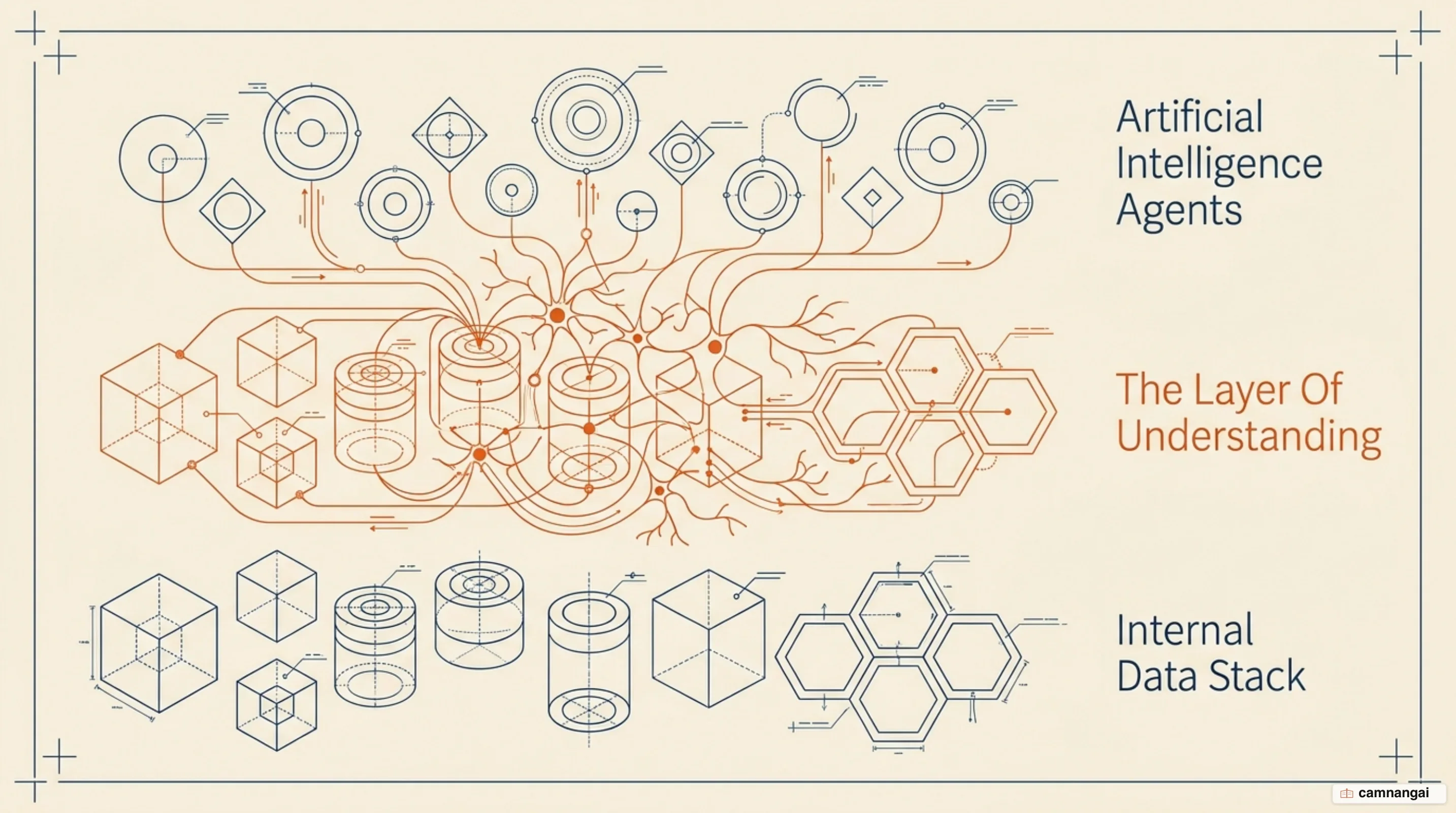
What is a context warehouse?
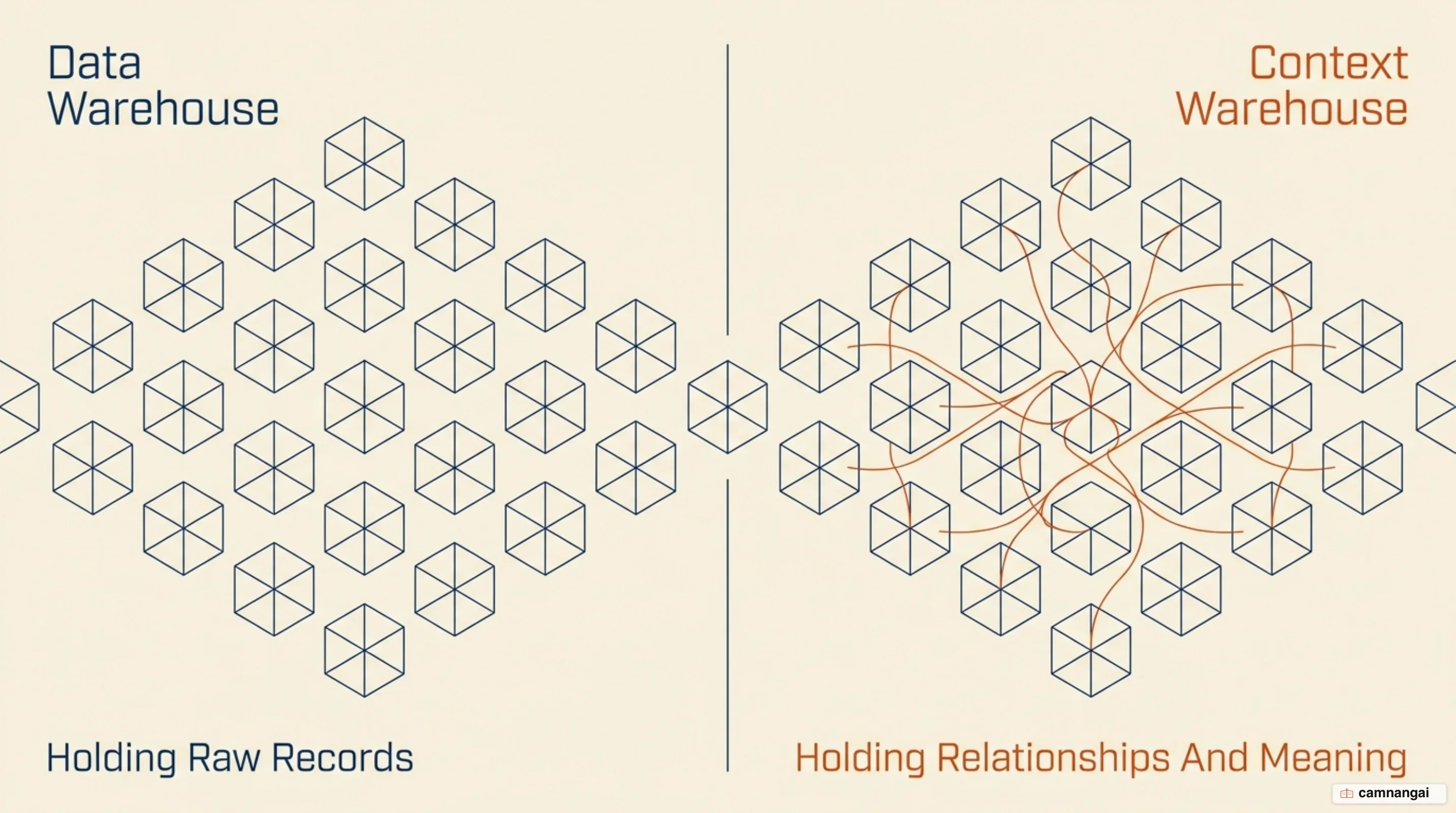
A context warehouse is a system of understanding that holds a machine-readable layer of business reality. A traditional data warehouse stores raw records; a context warehouse captures the connective tissue around them — the relationships, the operational norms, the traversal logic that makes a number mean something. It is a continuously maintained layer that maps how an organization actually functions across its technical and operational stack.
Technically it runs as a background processing engine. Modus pairs small language models with search engines, vector search, and a graph database to synthesize context ahead of time rather than at the moment a question arrives. Centralizing that work removes the alternative most teams are living with today: hand-maintaining a Markdown file, or hardcoding business logic into system prompts that go stale the moment a definition changes.
The distinguishing property is not what a context warehouse stores but that it never stops updating — it observes work as it happens, so the context served to a model stays synchronized with the current state of the business.
That is the part teams underestimate, and it is the part that decides whether the layer is still useful in six months.
The context gap: why agents with plenty of data still answer wrong
The context gap is the distance between the data an agent can reach and the expertise needed to reason over it. An agent with read access to Snowflake and GitHub still fails when it lacks the definitions governing those datasets. Intelligence does not compensate for missing context; a capable model with poor context produces confidently wrong answers, because it infers business logic instead of being handed it.
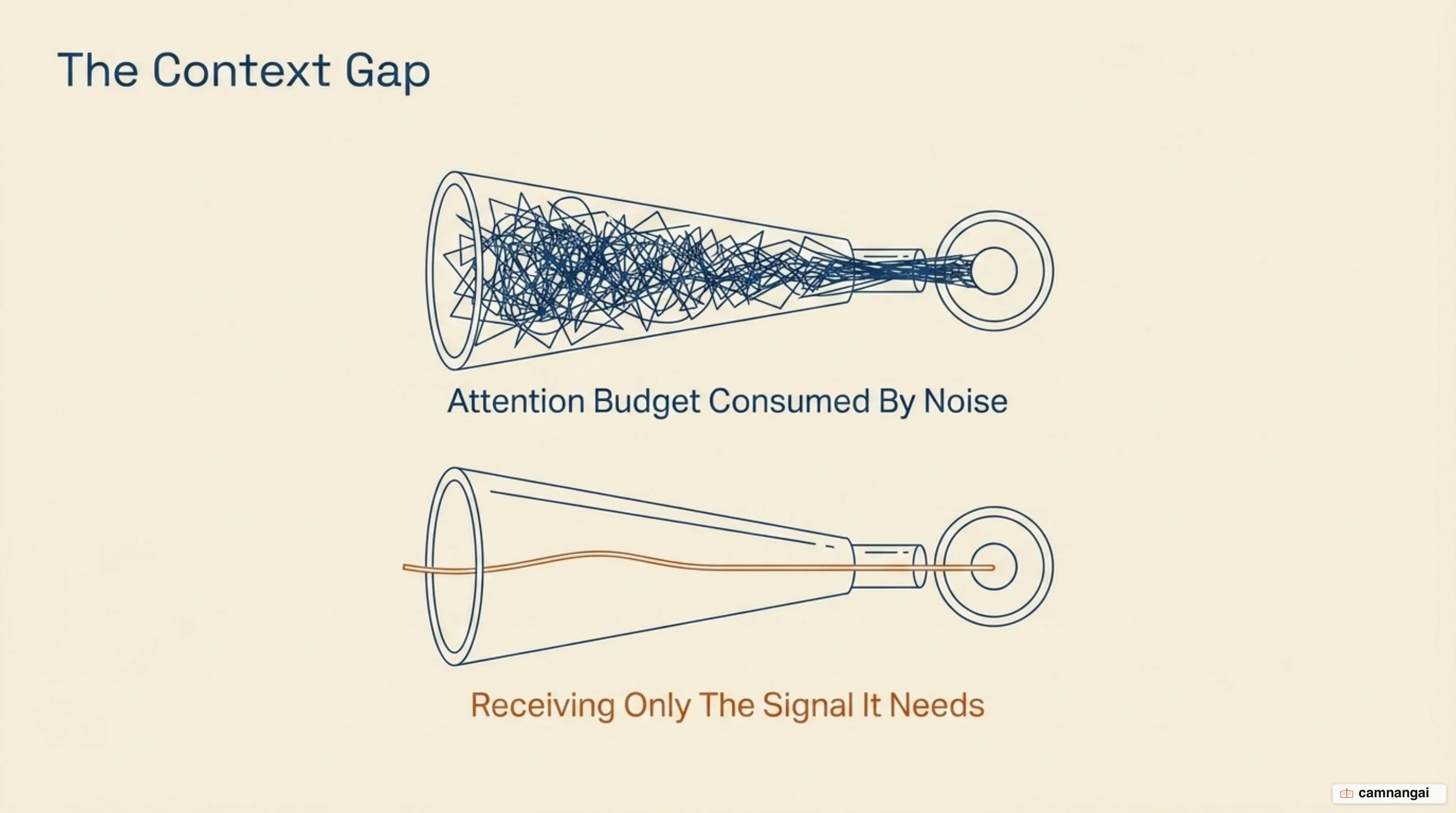
There is an architectural constraint underneath. A transformer creates n² pairwise relationships across n tokens, so attention is a finite budget that every additional token draws down. As the context window fills with irrelevant or outdated material — context rot — retrieval precision and long-range reasoning both degrade. Anthropic frames the goal of context engineering as finding the smallest possible set of high-signal tokens that still gets the outcome you want.
That budget gets spent badly when an agent has to comb through hundreds of pull requests or Jira tickets simply to work out what matters before starting the job it was given. Modus moves that sorting and synthesis off the inference turn and into the infrastructure layer, handing the frontier model a finished brief so its attention goes to the reasoning problem instead of triage.
How Modus works: the Context Miner, the Context Composer and the four deployment stages
Two components carry the work. The Context Miner continuously crawls organizational assets (GitHub, dbt, Jira, Snowflake, Postgres) to reverse-engineer how the business runs. It works on deltas rather than full re-scans, with its own logic for what to check and how often, reading metadata and real usage patterns such as the queries analysts actually write.
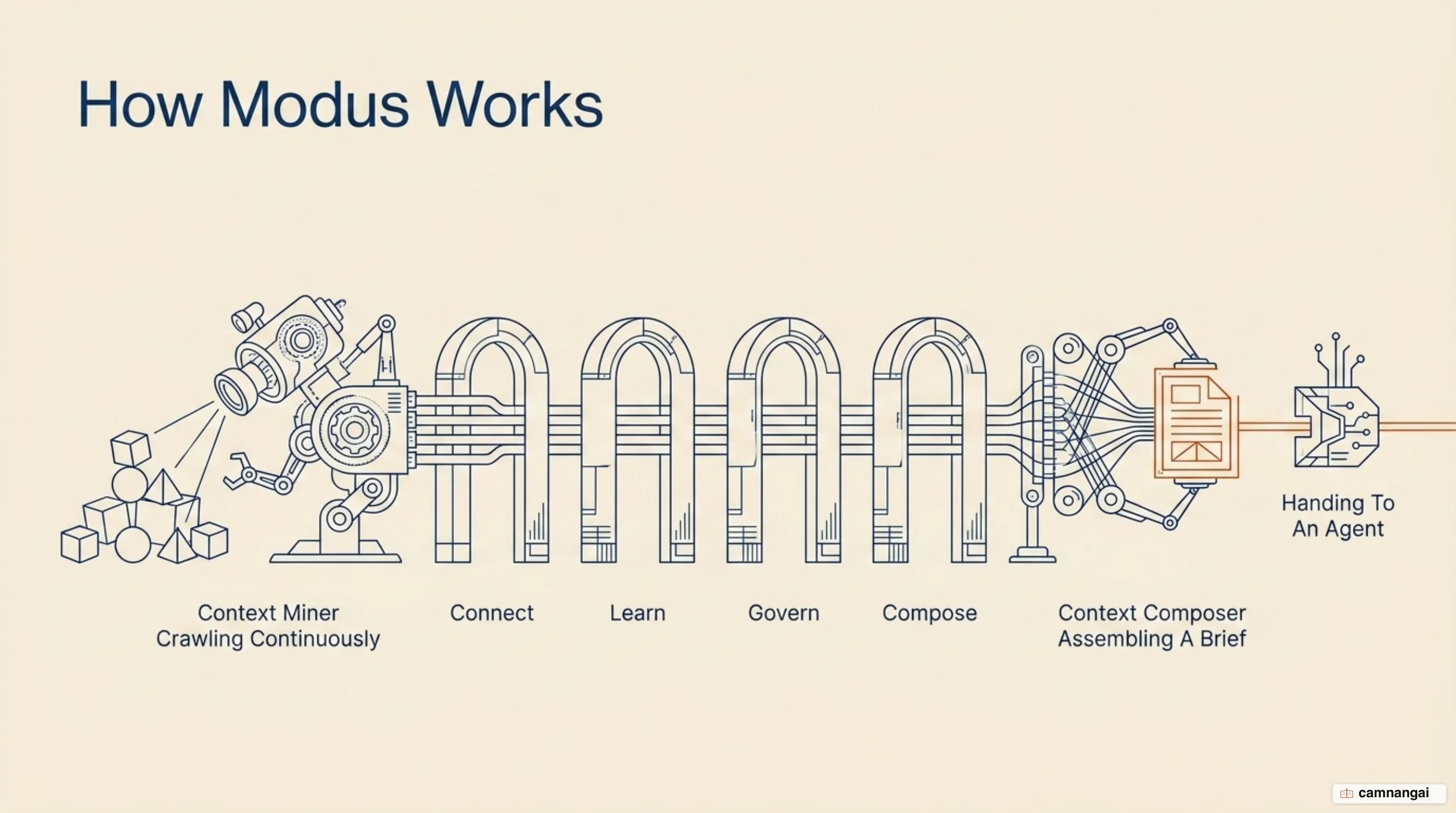
The Context Composer turns that mined understanding into dynamically generated skills: short, purpose-built briefs assembled in real time and handed to an agent the moment it receives a task. The agent gets the exact slice it needs, not a full data object dropped into its context window.
Deployment runs in four stages:
| Stage | What happens |
|---|---|
| Connect | Metadata-first integration with the stack, structured and unstructured. Nothing moves. |
| Learn | The warehouse fills itself by observing work already happening and tracking deltas. |
| Govern | Administrators set what each agent can see, enforced before anything reaches a model. |
| Compose | Relevant, permission-checked context is served in real time. |
How a context warehouse differs from a semantic layer, a data catalog and RAG
Against RAG, the difference is what gets delivered. In its plain form, retrieval-augmented generation finds documents and passes them to the model, which then does the sorting itself — modern RAG systems add a re-ranking step, but what they hand back is still passages. A context warehouse governs structured business meaning, identity, and policy before retrieval happens, and returns a synthesized brief rather than a pile of passages.
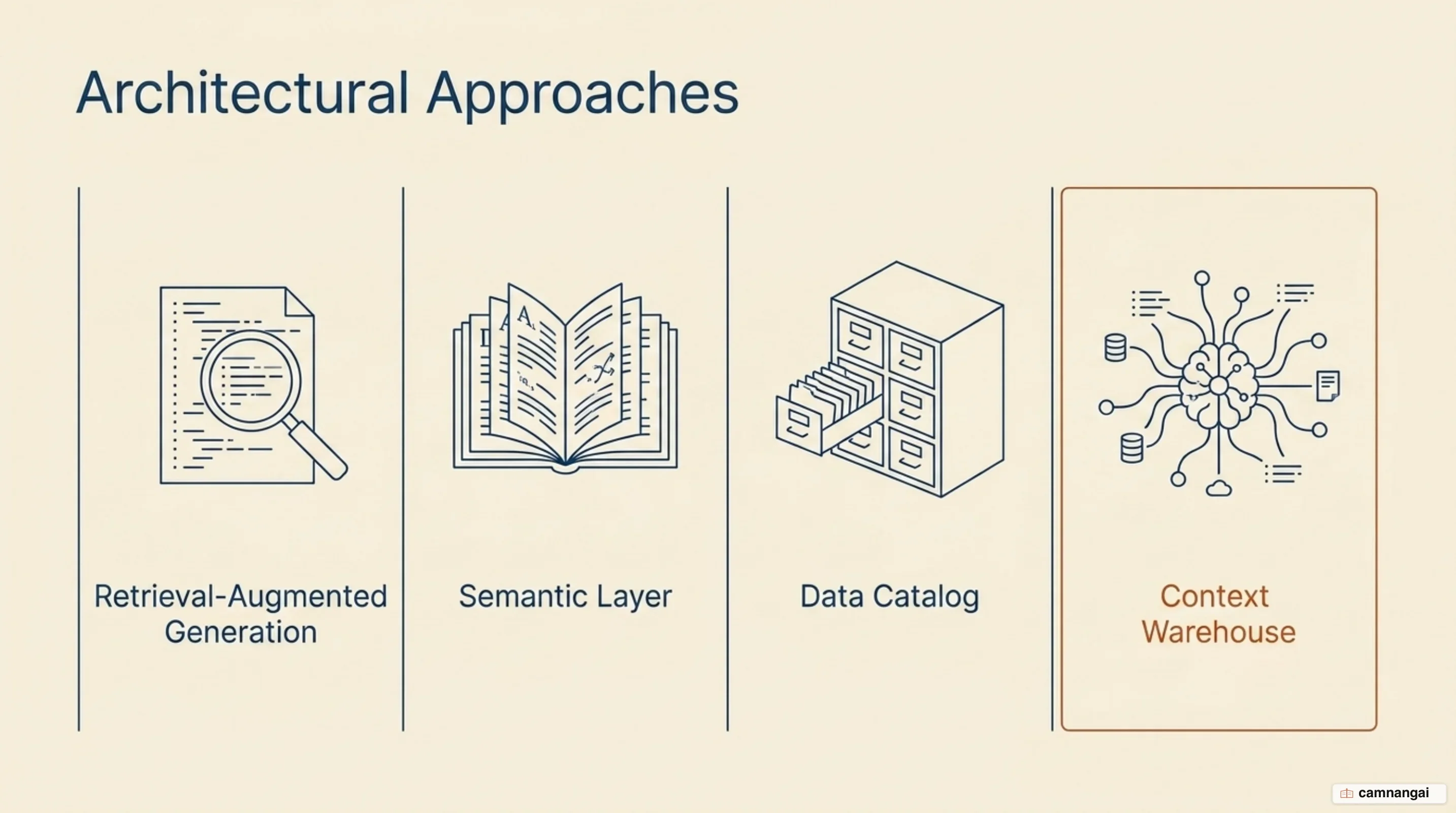
Against a semantic layer, the difference is scope and consumer. Semantic layers standardize metrics (what counts as gross margin, what counts as an active customer) and were designed for humans reading dashboards. They supply definitions but not the cross-system relationships, governance signals, and policy context an agent needs to move between a CRM and an ERP. Gartner predicts that by 2028, 60% of agentic analytics projects relying solely on the Model Context Protocol (MCP) will fail for lack of a consistent semantic layer underneath. A context warehouse treats the semantic layer as one input, not the whole answer.
Against a data catalog, the difference is posture. Catalogs inventory what exists and are written to be read by people. A context warehouse is built to be queried by machines at machine speed during multi-turn reasoning, and it maintains itself rather than waiting for someone to update a description.
Connecting agents over MCP, API and SDK
Modus is designed to serve agents a company already runs rather than replace them. Agents call it over MCP or a REST API and get back permission-checked context for the task at hand — Claude, Cursor, or something built in-house. You keep the agent; Modus maintains the understanding underneath it. Teams that prefer to build on the platform directly can run scheduled or triggered workflows with human review points and full tracing.
Everything available in the platform is available in code, through an SDK, API, CLI, and MCP interface. Configuration is versioned in Git and reviewed by pull request, which puts the context layer under the same engineering discipline as the rest of the stack. Classification topics can be pushed through the API, so an organization's own taxonomy drives the system.
That decoupling is the point. Because context management sits outside any particular warehouse, model, or agent framework, and because configuration is exportable, adopting a new model does not mean rebuilding how context is managed.
Tokens, cost and the claim of up to 10x fewer per query
System prompt bloat is a measurable problem, not a theoretical one. Datadog's 2026 State of AI Engineering report found that 69% of input tokens across customer traces were system prompts (internal instructions, policy definitions, and tool guidance), because engineers hardcode business logic into every call. That consumes budget and adds latency before the model reaches the actual question.
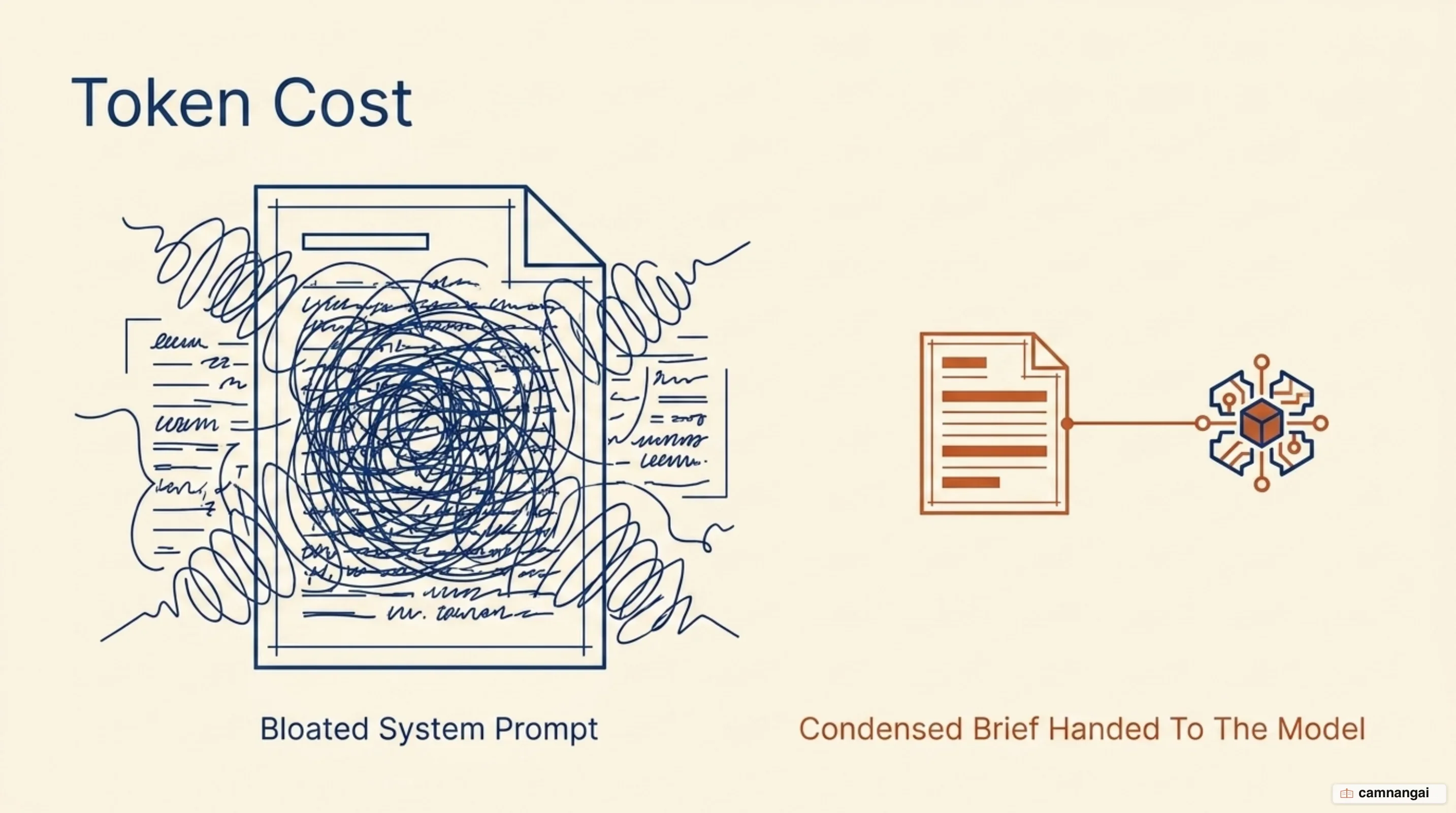
Modus pushes the preparatory work down to cheap small language models running in the background, so the expensive model only ever sees a condensed brief. Modus claims this cuts token consumption per query by up to tenfold. Treat that as a vendor figure rather than an independent benchmark — no third-party measurement of it exists yet. The underlying logic is sound regardless: a frontier model spending its budget on retrieval and sorting is being paid premium rates for menial work.
Governance, security and access scope
The security architecture is metadata-first. Modus learns from metadata and usage patterns rather than the records themselves, so raw customer data stays in the environment it already lives in. Primary data remains in the customer's own warehouse; Modus manages the understanding layer above it.
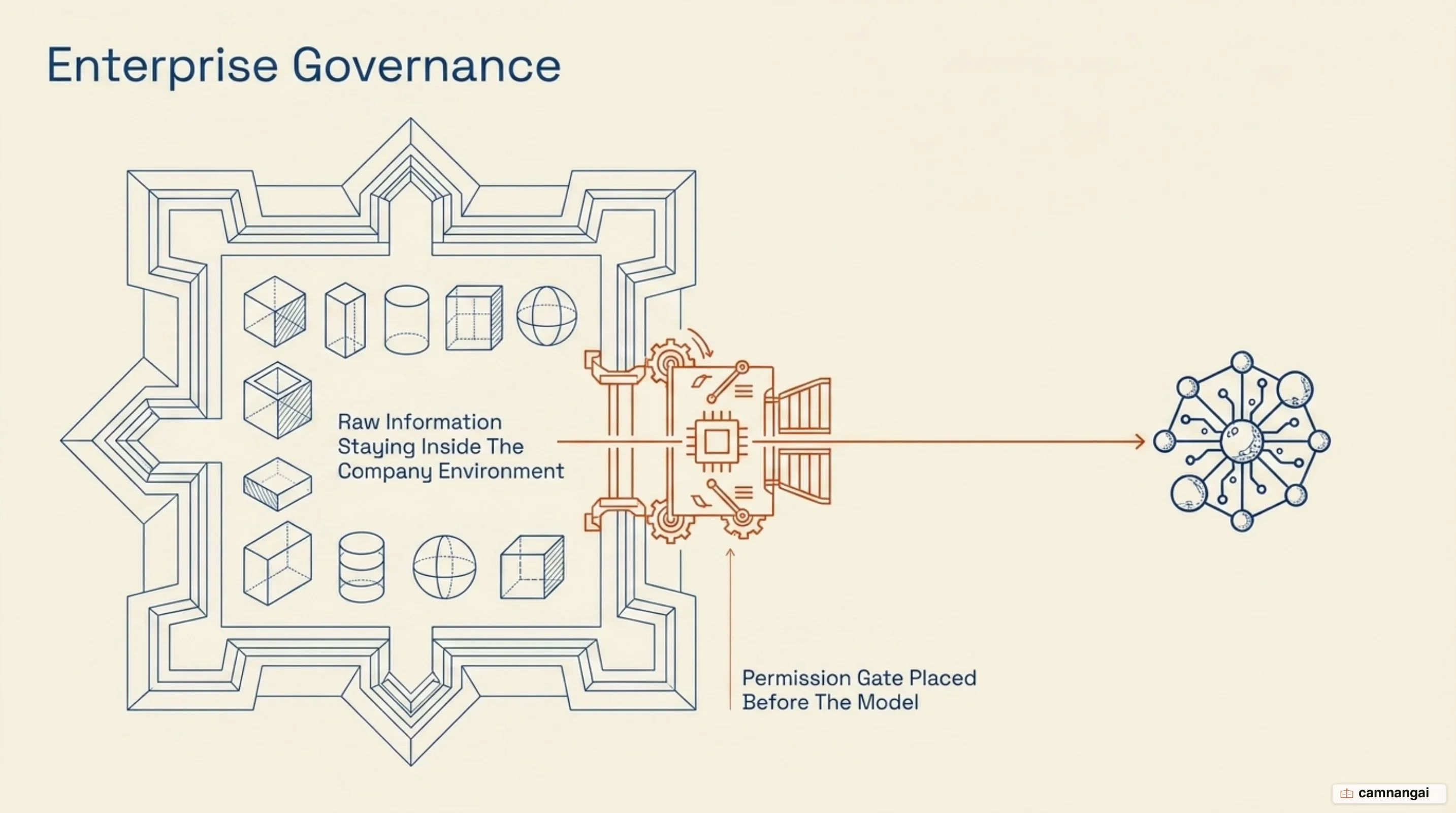
Governance is applied once, at the layer every agent runs through, and enforced before anything reaches a model. Access is tied to the user's authenticated identity and the system never elevates permissions, so an agent cannot become a route around a permission its user does not have. Modus lists SOC 2 Type II and ISO 27001 certifications, along with GDPR, HIPAA, and CCPA compliance.
Who built Modus and when you actually need a context warehouse
Modus was founded by Daniel Shimoni (CEO, previously VP of Product at Lusha) and Tomer Mesika (CTO, previously Head of Architecture at Cyera), who left their roles in September 2025 and hired their first employees in January 2026. Alongside Insight Partners, the seed round drew Soma Capital and angel investors including founders from Cyera and Wix. The company sells to engineering teams, the CTO office, and the data-and-AI enablement function that has grown out of traditional data teams.
In my view the honest test for whether you need one is maintenance burden, not enthusiasm for a new infrastructure category. If your agents are drifting because Sales and Finance define revenue differently, if your token spend is going on retrieval rather than reasoning, or if someone on your team is quietly losing an afternoon a week keeping a Markdown file in sync with how the business now works — that recurring cost is what a context warehouse is meant to absorb. If none of those is biting yet, a well-maintained system prompt is still the cheaper answer.
References
- Modus - The Context Warehouse for Enterprise AI
- Modus raises $10M to build a context warehouse for AI agents
- Israeli AI startup Modus emerges from stealth with $10 million to solve enterprise 'context gap'
- Modus Raises $10 Million to Launch Context Warehouse for Enterprise AI
- Effective context engineering for AI agents
- What Is a Context Layer for AI Agents? A 2026 Enterprise Guide
- What Is a Semantic Layer for AI Agents? A Complete 2026 Guide